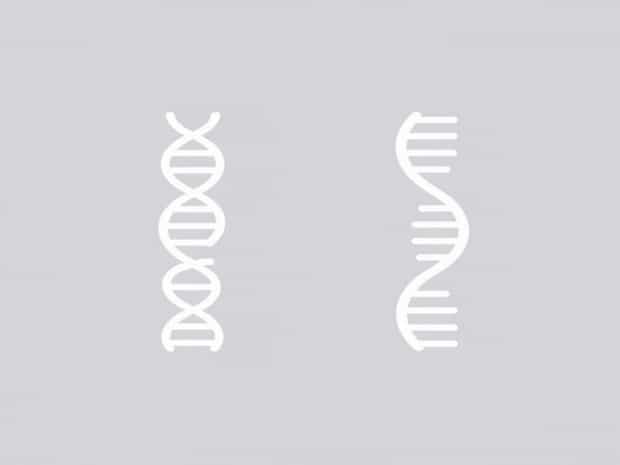
Alpha Helices And Beta Sheets
Proteins are the workhorses of life, performing countless functions in every cell of every organism. Their functions are largely determined by their shapes, which are built from chains of amino acids folding into specific structures. Among the most important structural elements in proteins are alpha helices and beta sheets, two types of secondary structures that provide stability and flexibility. Understanding these structures is crucial for fields like biochemistry, molecular biology, and drug design because they influence how proteins interact with other molecules and how they perform their biological roles.
What Are Alpha Helices?
Alpha helices are spiral-shaped structures formed when the backbone of a protein twists into a right-handed coil. This shape is stabilized by hydrogen bonds that form between the carbonyl oxygen of one amino acid and the amide hydrogen of another amino acid located four residues ahead in the chain. The resulting hydrogen bond pattern holds the helical structure firmly in place while allowing some flexibility.
Characteristics of Alpha Helices
- The helix typically completes one turn every 3.6 amino acids, giving it a regular and predictable geometry.
- The side chains of amino acids in an alpha helix project outward from the central axis, minimizing steric clashes and allowing interactions with other molecules.
- Alpha helices often occur in regions of proteins that require elasticity, such as in fibrous proteins or segments of enzymes that undergo conformational changes.
- The stability of alpha helices can be influenced by the specific amino acids involved, with proline often acting as a helix breaker due to its rigid ring structure.
Functions of Alpha Helices
Alpha helices play several roles in protein function. They can act as scaffolds to support other parts of a protein, serve as recognition sites for binding to other molecules, and form channels through cell membranes. In membrane proteins, alpha helices often span the lipid bilayer, providing structural integrity while allowing selective passage of ions and small molecules.
Understanding Beta Sheets
Beta sheets are another type of secondary structure that contrasts with the spiral shape of alpha helices. Instead of coiling, beta sheets are formed by linking two or more extended strands of the polypeptide chain side by side through hydrogen bonding. These strands can align in either parallel or antiparallel orientations, giving rise to different hydrogen bonding patterns and slightly different mechanical properties.
Characteristics of Beta Sheets
- Strands in a beta sheet are almost fully extended, unlike the coiled shape of alpha helices.
- Hydrogen bonds form between the backbone atoms of neighboring strands, providing stability and rigidity to the structure.
- Side chains in beta sheets alternate above and below the plane of the sheet, allowing interactions with other regions of the protein or with surrounding molecules.
- Beta sheets can be flat or twisted, depending on the overall protein context and sequence of amino acids.
Functions of Beta Sheets
Beta sheets contribute to the mechanical strength of proteins and are commonly found in structural proteins such as silk fibroin. In globular proteins, beta sheets often form the core, providing a stable scaffold around which the rest of the protein folds. Beta sheets also participate in protein-protein interactions and can create binding surfaces for other molecules. Misfolded beta sheets are sometimes associated with disease, as in the case of amyloid fibrils found in Alzheimer’s disease.
Comparing Alpha Helices and Beta Sheets
While both alpha helices and beta sheets are stabilized by hydrogen bonding, their shapes and roles in proteins differ significantly. Alpha helices are coiled and flexible, suitable for regions that require movement or elasticity, whereas beta sheets are extended and rigid, ideal for providing structural support. The choice between forming a helix or a sheet often depends on the amino acid sequence, local environment, and functional requirements of the protein.
Key Differences
- Alpha helices are spiral-shaped; beta sheets are extended and planar or slightly twisted.
- Alpha helices hydrogen bond within the same strand; beta sheets hydrogen bond between strands.
- Alpha helices have side chains radiating outward from the coil; beta sheets have alternating side chains above and below the sheet.
- Helices are flexible and often found in dynamic regions; sheets are rigid and often form the core or framework of proteins.
Importance in Protein Folding
Protein folding is the process by which a linear chain of amino acids adopts its functional three-dimensional shape. Alpha helices and beta sheets are critical in this process because they form early during folding and serve as nucleation points around which the rest of the protein folds. Misfolding can lead to loss of function or aggregation, emphasizing the importance of correctly forming these secondary structures. Studying alpha helices and beta sheets also aids in designing synthetic proteins and understanding diseases caused by protein misfolding.
Experimental Techniques to Study Alpha Helices and Beta Sheets
Scientists use various methods to study these secondary structures. X-ray crystallography provides high-resolution images of protein architecture, revealing the exact arrangement of helices and sheets. Nuclear magnetic resonance (NMR) spectroscopy can observe proteins in solution, giving insight into their dynamic behavior. Circular dichroism (CD) spectroscopy is another common method, useful for estimating the overall content of alpha helices and beta sheets in a protein sample.
Applications in Biotechnology and Medicine
Knowledge of alpha helices and beta sheets has practical applications. In drug design, understanding the location and structure of helices and sheets can help identify binding sites and predict interactions. In biotechnology, synthetic proteins are engineered with specific secondary structures to achieve desired properties, such as elasticity, stability, or catalytic activity. Even in nanotechnology, these protein motifs inspire materials with unique mechanical or chemical properties.
Alpha helices and beta sheets are fundamental building blocks of protein structure. Their specific shapes, hydrogen bonding patterns, and side chain arrangements allow proteins to achieve remarkable stability and functional diversity. By studying these secondary structures, scientists can uncover the secrets of protein folding, design new molecules, and better understand diseases associated with misfolded proteins. Whether providing flexibility, structural support, or interaction surfaces, alpha helices and beta sheets are essential to life at the molecular level, demonstrating how simple patterns of hydrogen bonding can lead to complex and vital biological functions.