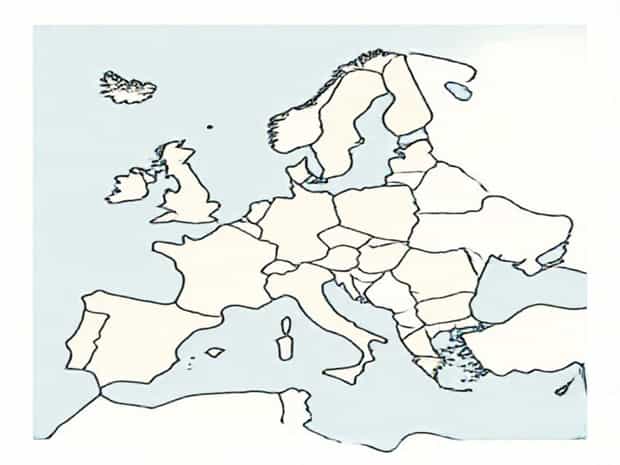
Definition Of Cartography By Different Scholars
Cartography is a field that has evolved over centuries, encompassing the art, science, and technology of making maps. It plays a crucial role in understanding the world, allowing people to visualize spatial relationships, geographic patterns, and environmental phenomena. Scholars from different disciplines have studied cartography and provided varied definitions that highlight its multifaceted nature. These definitions range from seeing cartography purely as a technical skill to viewing it as an interdisciplinary practice that combines geography, design, and communication. Understanding how different scholars define cartography helps us appreciate the complexity and depth of this field.
Traditional Definitions of Cartography
Historically, cartography was primarily seen as the science of map-making. Early scholars focused on the technical precision and accuracy of maps as representations of the Earth’s surface. According to Robinson, cartography involves the systematic creation of maps for navigation, exploration, and documentation of geographical information. He emphasized that cartography is not just an artistic endeavor but also a scientific one, requiring knowledge of geography, mathematics, and measurement techniques.
Another classical perspective comes from Tobler, who described cartography as the graphic representation of spatial phenomena. In his view, maps serve as tools for both analysis and communication. This definition underscores that cartography is not only about drawing maps but also about representing geographic data in a way that is understandable and useful to the user.
Modern Interpretations
With advances in technology, the definition of cartography has expanded. Modern scholars consider it an interdisciplinary science that integrates computer technology, geographic information systems (GIS), and data visualization. Monmonier, for example, defines cartography as a means of making complex spatial information accessible to a wide audience. He emphasizes the role of interpretation and design in conveying information effectively. This modern approach shows that cartography is more than just technical accuracy; it also involves understanding the audience and ensuring clarity in presentation.
In the digital age, Goodchild highlights cartography as an evolving discipline where traditional map-making intersects with computational methods and big data. According to him, cartography now includes the analysis of geospatial data, interactive maps, and web-based mapping platforms. This definition reflects the dynamic nature of the field, where cartographers must be skilled not only in geography but also in technology, visualization, and communication.
Cartography as a Communication Tool
Several scholars emphasize the communicative aspect of cartography. Harley, a prominent figure in critical cartography, argues that maps are not neutral tools; they are a form of communication that conveys power, perspective, and cultural values. From this perspective, cartography is defined not only by its technical process but also by its role in shaping how people perceive and interact with space. This approach expands the definition of cartography to include social, cultural, and political dimensions.
Similarly, Wood and Fels highlight that cartography is about translating complex spatial data into a form that is meaningful for specific audiences. They argue that maps are a medium of storytelling, helping users understand spatial relationships and make decisions based on geographic information. This definition focuses on the interpretative and communicative functions of cartography, moving beyond simple representation to include explanation and analysis.
Cartography in Education and Research
In the academic context, cartography is often defined as both a subject of study and a research tool. According to Slocum et al., cartography encompasses the principles and practices involved in the design, production, and use of maps. Their definition highlights the importance of understanding map design, symbolization, and spatial thinking. Educational programs in cartography often teach these skills alongside technical tools such as GIS, remote sensing, and digital mapping software.
Furthermore, MacEachren suggests that cartography is a cognitive process that involves perception, reasoning, and decision-making. Maps are seen as tools for analysis and problem-solving, helping researchers and practitioners interpret complex spatial phenomena. This perspective broadens the definition of cartography to include the intellectual and analytical skills required to create meaningful representations of geographic information.
Comparative Definitions by Scholars
- RobinsonCartography is the systematic creation of accurate maps for exploration, navigation, and documentation.
- ToblerCartography is the graphic representation of spatial phenomena for analysis and communication.
- MonmonierCartography is the process of making complex spatial information accessible and understandable to the public.
- GoodchildCartography is a dynamic field integrating traditional mapping, GIS, interactive maps, and computational techniques.
- HarleyCartography is a form of communication that reflects cultural, social, and political perspectives.
- Wood and FelsCartography is the translation of complex spatial data into meaningful visual narratives for specific audiences.
- Slocum et al.Cartography is the study and practice of designing, producing, and using maps, emphasizing principles of map design and spatial thinking.
- MacEachrenCartography is a cognitive process involving perception, reasoning, and decision-making to interpret spatial information.
Key Elements in Defining Cartography
Across these varied definitions, certain themes consistently emerge. Cartography is recognized as
- A technical skill that involves accurate measurement, design, and representation of spatial data.
- A communication tool that conveys geographic information clearly and meaningfully.
- An interdisciplinary field integrating geography, design, technology, and cognitive science.
- An evolving practice that adapts to new technological innovations, such as GIS, remote sensing, and interactive digital maps.
- A medium of analysis and interpretation that helps users make decisions and understand spatial relationships.
Defining cartography is not straightforward because the field encompasses multiple dimensions, including science, art, technology, and communication. Different scholars have emphasized various aspects, from technical precision and map-making skills to the communicative, analytical, and social functions of maps. Understanding these diverse definitions allows us to appreciate cartography as a dynamic and multifaceted discipline. Whether approached from a traditional or modern perspective, cartography remains central to visualizing and understanding the spatial complexities of our world, shaping the way people perceive, interact with, and make decisions about space.
In summary, cartography is far more than drawing maps; it is a science of representation, a form of communication, and a tool for analysis and decision-making. By studying how different scholars define cartography, we gain insight into the evolving nature of the field, recognizing its technical, cognitive, and societal dimensions. This comprehensive understanding highlights the significance of cartography in research, education, and everyday life, reinforcing its role as a cornerstone of geographic knowledge.