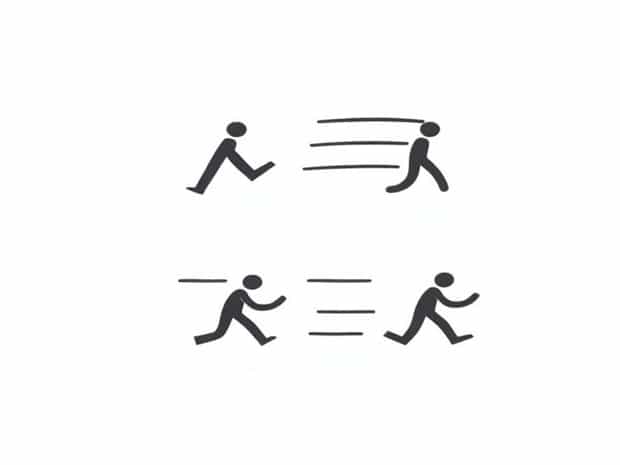
Explain Uniform And Nonuniform Motion With Example
Motion is a fundamental concept in physics that describes how objects change their position over time. Understanding motion helps us explain a wide range of everyday phenomena, from vehicles traveling on roads to planets orbiting the sun. Two primary categories of motion are uniform motion and nonuniform motion, each with distinct characteristics. Uniform motion occurs when an object moves at a constant speed in a straight line, while nonuniform motion involves changes in speed, direction, or both. Exploring these types of motion, along with real-world examples, provides clarity on how objects behave in different situations and lays the foundation for further studies in mechanics, kinematics, and dynamics.
Uniform Motion
Uniform motion refers to the motion of an object traveling in a straight path with a constant speed. In this type of motion, the object covers equal distances in equal intervals of time, regardless of the duration of the time interval considered. The key feature of uniform motion is that the velocity remains constant. Since there is no change in speed or direction, the acceleration of the object is zero. Uniform motion is an idealized concept but serves as a useful model for understanding more complex motions and for performing calculations in physics problems.
Characteristics of Uniform Motion
- Constant velocity The speed and direction of motion remain unchanged.
- Zero acceleration There is no change in the velocity vector.
- Equal displacement in equal time intervals The distance covered per unit time is consistent.
- Predictable motion Future positions of the object can be easily calculated using the formulas = vt, wheresis displacement,vis velocity, andtis time.
Examples of Uniform Motion
One common example of uniform motion is a car traveling at a constant speed of 60 kilometers per hour on a straight highway. In this scenario, the car covers the same distance every hour without accelerating or decelerating. Another example can be found in astronomy planets orbiting the sun at nearly constant speed along specific paths approximate uniform motion over short time intervals. Uniform motion also occurs in objects moving on a frictionless surface, such as a puck gliding steadily across an ice rink, provided no external forces act on it to change its speed or direction.
Nonuniform Motion
Nonuniform motion occurs when an object’s speed, direction, or both change over time. Unlike uniform motion, the distance covered by an object in equal time intervals is not constant. Nonuniform motion involves acceleration, which can be positive (speeding up), negative (slowing down), or changing direction. This type of motion is far more common in everyday life, as external forces like friction, gravity, or applied forces often cause objects to vary their velocity. Understanding nonuniform motion requires analyzing instantaneous velocity, acceleration, and the factors influencing the object’s motion.
Characteristics of Nonuniform Motion
- Variable velocity Speed or direction of the object changes over time.
- Non-zero acceleration The object experiences a change in velocity.
- Unequal displacement in equal time intervals The distance covered differs in successive time intervals.
- Complex motion prediction Calculations often require advanced kinematic equations and knowledge of forces acting on the object.
Examples of Nonuniform Motion
A classic example of nonuniform motion is a car accelerating at a traffic light or decelerating when approaching a stop sign. In this case, the car’s speed changes over time, and the distance covered in each second is not constant. Another example is a ball thrown vertically upward. As it rises, the ball slows down due to the force of gravity, eventually stopping momentarily at the peak before accelerating downward. Similarly, a roller coaster exhibits nonuniform motion, with both speed and direction constantly changing as it travels along the tracks, creating experiences of acceleration, deceleration, and curved motion.
Comparing Uniform and Nonuniform Motion
Understanding the differences between uniform and nonuniform motion is critical for analyzing physical systems. The primary distinction lies in the constancy of velocity uniform motion has constant velocity and zero acceleration, while nonuniform motion involves changes in velocity and non-zero acceleration. Additionally, the displacement-time relationship differs. In uniform motion, a displacement-time graph is a straight line with a constant slope representing the speed. In nonuniform motion, the graph is curved, reflecting variations in speed over time. Recognizing these differences allows students and researchers to apply the correct equations and principles when solving problems involving motion.
Applications in Real Life
Both uniform and nonuniform motion are encountered in numerous real-life scenarios. Uniform motion is idealized but can be approximated in controlled environments, such as conveyor belts moving at constant speed in factories, or trains maintaining steady speeds on straight tracks. Nonuniform motion dominates dynamic systems, including vehicle acceleration, sports movements, machinery, and natural phenomena like falling objects, flowing rivers, or orbiting celestial bodies with varying speeds. Engineers, physicists, and everyday problem-solvers must account for the type of motion to predict outcomes, ensure safety, and optimize performance in practical applications.
Mathematical Representation
Uniform motion can be described with a simple linear equation
s = vt
Here,sis displacement,vis constant velocity, andtis time. This equation highlights the proportionality between distance and time, which characterizes uniform motion.
Nonuniform motion requires more complex equations derived from kinematics. For instance, if acceleration is constant, the motion can be described by
- v = u + at, wherevis final velocity,uis initial velocity,ais acceleration, andtis time.
- s = ut + ½at², representing displacement under constant acceleration.
- v² = u² + 2as, relating velocity and displacement directly with acceleration.
These equations allow precise calculation of distance, speed, and acceleration for objects undergoing nonuniform motion, which is essential for scientific and engineering applications.
Uniform and nonuniform motion are fundamental concepts that describe how objects move in different scenarios. Uniform motion is characterized by constant velocity and equal displacement over equal time intervals, exemplified by a car moving steadily on a straight highway or a puck gliding on ice. Nonuniform motion involves changing speed, direction, or both, resulting in acceleration and unequal displacement, as seen in accelerating vehicles, thrown balls, or roller coasters. Understanding these types of motion enables accurate predictions, problem-solving, and application in daily life, engineering, and scientific research. By distinguishing between uniform and nonuniform motion, we gain insights into the forces, energy changes, and dynamics that govern how objects move, providing a foundation for further exploration in mechanics and physics.
Ultimately, the study of motion whether uniform or nonuniform forms the cornerstone of classical mechanics. Observing and analyzing real-world examples, applying mathematical representations, and understanding underlying forces allow us to describe, predict, and harness the movement of objects in practical and scientific contexts. From everyday transportation to advanced technological systems, mastering the concepts of uniform and nonuniform motion is essential for anyone seeking to understand the physical world.