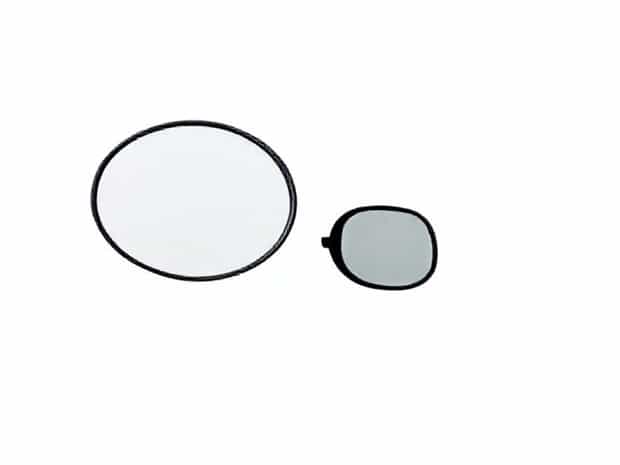
Difference Between Concave And Convex Mirror
Mirrors are an essential part of everyday life, used for purposes ranging from personal grooming to scientific experiments and technological applications. Among the various types of mirrors, concave and convex mirrors are particularly significant due to their unique shapes and distinct optical properties. Understanding the difference between concave and convex mirrors is important not only in physics and engineering but also in practical applications such as vehicle safety, optical instruments, and medical devices. Both types of mirrors manipulate light in specific ways, producing images that differ in size, orientation, and clarity.
Definition and Structure of Concave and Convex Mirrors
A concave mirror is a mirror whose reflective surface curves inward, resembling the inside of a bowl. This inward curvature allows concave mirrors to converge light rays toward a single focal point, making them capable of producing magnified images. Concave mirrors are often referred to as converging mirrors because of this ability to focus light.
On the other hand, a convex mirror has a reflective surface that curves outward, similar to the exterior of a sphere. This outward curvature causes light rays to diverge after reflection, making convex mirrors known as diverging mirrors. Convex mirrors cannot focus light to a single point but can produce wide-angle views, which are useful in various practical applications.
Key Structural Differences
- CurvatureConcave mirrors curve inward, while convex mirrors curve outward.
- Focal PointConcave mirrors have a real focal point where light converges; convex mirrors have a virtual focal point where light appears to diverge from.
- Reflective SurfaceThe reflective surface of a concave mirror is on the inner side of the curve, whereas in a convex mirror, it is on the outer side.
Image Formation in Concave and Convex Mirrors
The difference between concave and convex mirrors becomes particularly apparent in the type of images they produce. Concave mirrors can produce both real and virtual images depending on the position of the object relative to the focal point. When an object is placed beyond the focal length of a concave mirror, it forms a real, inverted, and sometimes reduced or magnified image. If the object is within the focal length, the mirror produces a virtual, upright, and magnified image.
In contrast, convex mirrors always produce virtual, upright, and diminished images regardless of the object’s position. This is due to the diverging nature of the reflected light rays, which makes the image appear smaller and closer than it actually is. This property is particularly valuable for applications that require a wide field of view.
Examples of Image Formation
- Concave mirrors are used in makeup mirrors to magnify facial features for detailed grooming.
- Concave mirrors are also used in telescopes and headlights to focus light into a narrow beam.
- Convex mirrors are commonly used as rear-view or side mirrors in vehicles to provide a wide-angle perspective of the surroundings.
- Convex mirrors are used in stores and public spaces for surveillance, allowing people to see a larger area.
Applications of Concave and Convex Mirrors
Concave and convex mirrors have distinct applications based on their optical properties. Concave mirrors are widely used in devices that require light focusing or image magnification. For example, in medical instruments such as ophthalmoscopes and dental mirrors, concave mirrors help focus light to illuminate specific areas for detailed examination. Concave mirrors are also found in telescopes and solar concentrators, where converging light rays is essential.
Convex mirrors, with their ability to provide a wide field of view, are extensively used for safety and surveillance. Vehicle side mirrors are convex to allow drivers to see more of the road behind them, reducing blind spots. Convex mirrors are also installed at intersections, driveways, and parking lots to enhance visibility and prevent accidents. Additionally, convex mirrors are used in stores to monitor large areas for security purposes.
Advantages and Limitations
- Concave MirrorsAdvantages include the ability to magnify objects and focus light; limitations include limited field of view and sensitivity to object placement.
- Convex MirrorsAdvantages include wide-angle visibility and reduced blind spots; limitations include the inability to magnify objects or produce real images.
Understanding Focal Length and Radius of Curvature
The focal length and radius of curvature are important parameters that distinguish concave and convex mirrors. In a concave mirror, the focal length is positive, meaning the focal point lies in front of the mirror. The radius of curvature is the distance between the mirror’s surface and its center of curvature, directly affecting the mirror’s magnifying power. For convex mirrors, the focal length is considered negative, as the virtual focal point is located behind the mirror. Understanding these measurements is crucial for designing optical systems and determining the appropriate mirror for a specific application.
Mathematical Representation
The mirror equation, 1/f = 1/v + 1/u, applies to both concave and convex mirrors, where f is the focal length, v is the image distance, and u is the object distance. Sign conventions differ for concave and convex mirrors concave mirrors use positive values for focal length and image distance when forming real images, while convex mirrors use negative values for focal length and image distance since they form virtual images. These formulas help predict image characteristics accurately for scientific and practical uses.
Practical Examples in Daily Life
Concave mirrors are often found in personal grooming, vehicle headlights, telescopes, and medical instruments. For instance, a dentist uses a concave mirror to focus light inside a patient’s mouth. Similarly, a concave mirror in a flashlight concentrates light into a strong beam, increasing visibility. Convex mirrors, meanwhile, are integral to traffic safety and security. Vehicle side mirrors use convex surfaces to reduce blind spots, while convex mirrors in stores enable staff to monitor large areas efficiently. Understanding the difference between concave and convex mirrors helps users select the right mirror for the desired function.
The difference between concave and convex mirrors lies in their shape, image formation, and applications. Concave mirrors curve inward and converge light, producing magnified or real images, making them suitable for applications that require focusing or detailed viewing. Convex mirrors curve outward and diverge light, producing diminished virtual images, which are ideal for wide-angle visibility and safety. By understanding these differences, individuals and professionals can make informed decisions in selecting mirrors for personal, scientific, or industrial purposes. Mastery of concave and convex mirrors also enhances the understanding of fundamental optical principles and their practical implications in everyday life.