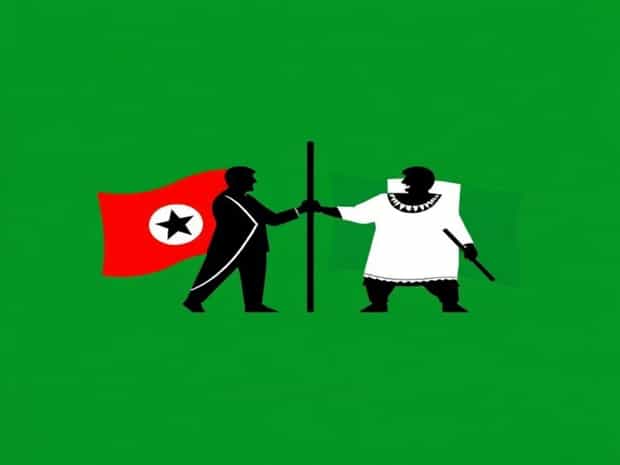
Both Kurdish And Irish Unification Movements
The Kurdish and Irish unification movements are two prominent examples of nationalist struggles aimed at achieving political unity and self-determination. While originating in different regions and contexts, these movements share common themes of resistance, identity, and the quest for autonomy. This topic explores the historical backgrounds, key events, and current developments of both movements, highlighting their similarities and differences.
Kurdish Unification Movement
The Kurdish people, an ethnic group primarily residing in regions of Turkey, Iraq, Iran, and Syria, have long aspired for recognition and autonomy. Their unification movement emerged in the late 19th century, gaining momentum after the dissolution of the Ottoman Empire and the subsequent establishment of new nation-states that marginalized Kurdish identity and rights.
One of the earliest significant uprisings was led by Sheikh Ubeydullah in 1880, who sought to establish an independent Kurdish state. Although the revolt was suppressed, it marked the beginning of organized Kurdish resistance against external domination. Throughout the 20th century, various Kurdish groups and leaders continued to advocate for Kurdish rights, often facing repression and persecution from the central governments of the countries they inhabited.
In Iraq, the Kurdish struggle gained international attention during the Iran-Iraq War in the 1980s, when Kurds supported Iran in hopes of achieving autonomy. This led to brutal reprisals from the Iraqi regime, including the infamous chemical attack on Halabja in 1988. Despite such setbacks, the Kurds in Iraq managed to establish a semi-autonomous region in the north, following the Gulf War and the establishment of a no-fly zone enforced by the United States and its allies.
In recent years, the Kurdish unification movement has seen significant developments. In May 2025, the Kurdistan Workers’ Party (PKK), a militant group that had been engaged in an insurgency against Turkey since 1984, officially announced its dissolution and the end of its armed struggle. This decision, influenced by a call from imprisoned PKK leader Abdullah Ãcalan, marks a potential shift toward peaceful political engagement and a new chapter in the Kurdish quest for autonomy.
Irish Unification Movement
The Irish unification movement seeks to reunify the island of Ireland, which has been politically divided since the early 20th century. The partition of Ireland in 1921 created two separate entities Northern Ireland, which remained part of the United Kingdom, and the Irish Free State (later the Republic of Ireland), which became an independent nation.
Efforts to reunify Ireland have been ongoing since partition. The Irish War of Independence (1919-1921) was a significant conflict that led to the creation of the Irish Free State. However, the partition left a legacy of division, with Northern Ireland remaining under British rule. Over the decades, various political and paramilitary groups, most notably the Irish Republican Army (IRA), have advocated for Irish unity, often through violent means.
The period known as The Troubles” (late 1960s-1998) was marked by intense sectarian conflict between Protestant unionists, who wished to remain part of the United Kingdom, and Catholic nationalists, who sought unification with the Republic of Ireland. The Good Friday Agreement of 1998 brought an end to most of the violence and established a devolved government in Northern Ireland, with power shared between unionists and nationalists.
In recent years, the political landscape in Northern Ireland has shifted. In 2024, Sinn Féin’s Michelle O’Neill became the first nationalist First Minister of Northern Ireland, a historic moment that signaled a potential move toward unification. Additionally, public opinion in Northern Ireland has been gradually shifting, with increasing support for a united Ireland, especially among the Catholic community.
Comparative Analysis
- Historical ContextBoth movements emerged in the aftermath of empires’ dissolution the Ottoman Empire for the Kurds and the British Empire for the Irish leading to the marginalization of their respective peoples and the division of their homelands.
- National IdentityCentral to both movements is the assertion of a distinct national identity. The Kurds have long sought recognition as a unique ethnic group with their own language and culture, while the Irish have emphasized their Gaelic heritage and Catholic faith as markers of national identity.
- Political StrugglesBoth movements have experienced periods of violent conflict. The Kurds have faced military repression from the states they inhabit, while the Irish have dealt with sectarian violence and political division.
- Peace EffortsRecent developments indicate a shift toward peaceful resolution. The PKK’s decision to disband and the political rise of Sinn Féin suggest that both movements are exploring non-violent avenues to achieve their goals.
The Kurdish and Irish unification movements, while distinct in their histories and contexts, share common aspirations for self-determination and national unity. Both have navigated complex political landscapes and faced significant challenges in their quests. As they continue to evolve, the international community watches closely, hopeful that these movements can achieve their goals through peaceful and democratic means.