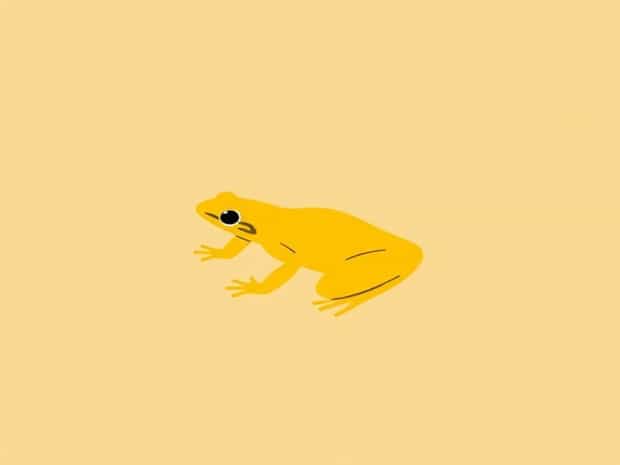
Is The Panamanian Golden Frog Extinct?
The Panamanian golden frog is one of the most striking amphibians in the world, known for its bright yellow skin with dark markings and its symbolic importance in Panama. Many people ask whether the Panamanian golden frog is extinct, because sightings in the wild have become rare and reports often suggest its population has disappeared from natural habitats. The situation of this small but significant frog highlights issues of conservation, disease, and the fragile balance of ecosystems. To understand its current status, it is important to explore the threats it faces, the role it plays in culture, and the global efforts to ensure its survival.
Understanding the Panamanian golden frog
The Panamanian golden frog, scientifically known asAtelopus zeteki, is a small species of toad native to the mountainous regions of Panama. Despite being commonly called a frog, it is actually part of the harlequin toad group. Its bright yellow skin serves as a warning to predators, since it produces toxins that can be dangerous if consumed. This striking coloration has made it a national symbol of Panama, often associated with good fortune and prosperity in local folklore.
Habitat and natural range
Historically, the Panamanian golden frog lived in streams, rivers, and cloud forests in central and western Panama. It thrived in moist environments with abundant vegetation, which supported its breeding and feeding needs. However, over the past few decades, its habitat has shrunk drastically due to environmental threats.
Is the Panamanian golden frog extinct in the wild?
The most pressing question is whether the Panamanian golden frog is extinct. The International Union for Conservation of Nature (IUCN) lists it ascritically endangered, and many researchers suggest that it is functionally extinct in the wild. This means that while there may still be a few isolated individuals, they no longer exist in sustainable populations outside of human care. Field surveys have found little to no evidence of thriving wild populations since the early 2000s.
Why is it considered possibly extinct in the wild?
- DiseaseThe chytrid fungus (Batrachochytrium dendrobatidis) has devastated amphibian populations worldwide, and the golden frog has been particularly vulnerable to this deadly infection.
- Habitat destructionDeforestation, agriculture, and urban development in Panama have destroyed much of the frog’s natural habitat.
- Climate changeChanges in temperature and rainfall patterns disrupt breeding cycles and reduce suitable habitats.
- Illegal collectionPoaching for the pet trade has further reduced wild numbers, though strict laws now protect the species.
Conservation efforts
Although the Panamanian golden frog may be nearly gone from the wild, it has not vanished completely thanks to dedicated conservation programs. Zoos, research institutions, and conservation organizations have established captive breeding programs to preserve the species and, ideally, reintroduce it in the future.
The Amphibian Rescue and Conservation Project
One of the most notable initiatives is the Amphibian Rescue and Conservation Project in Panama, which provides a safe environment for golden frogs to reproduce. These facilities protect them from disease and environmental threats, giving scientists a chance to study their biology and breeding patterns.
Zoos and international collaboration
Zoos in the United States and Panama play a major role in preserving the Panamanian golden frog. Captive populations are carefully managed to maintain genetic diversity, which is critical for any future reintroduction efforts. International collaboration ensures that knowledge, resources, and technology are shared to support the survival of the species.
Cultural importance in Panama
The Panamanian golden frog is not only a biological treasure but also a cultural icon. In Panamanian tradition, the golden frog is believed to bring good luck. It appears on currency, souvenirs, and artwork, making it one of the country’s most recognizable symbols. Its cultural status adds urgency to conservation efforts, since losing the frog would mean losing a living emblem of national identity.
Role in education and awareness
Schools, museums, and conservation centers in Panama use the golden frog as a tool for environmental education. By teaching younger generations about the importance of biodiversity and conservation, the species continues to inspire action even while it struggles for survival.
Challenges to reintroduction
While captive breeding programs are successful, returning the golden frog to the wild is complex. The main challenge remains the chytrid fungus, which still exists in Panama’s ecosystems. Without a reliable way to protect frogs from the disease, releasing them could lead to immediate losses. Scientists are researching possible solutions, including developing resistant populations or finding methods to control the fungus in natural habitats.
Scientific significance
Studying the Panamanian golden frog provides valuable insights into amphibian biology, disease resistance, and environmental adaptation. As amphibians are considered indicator species, their decline signals deeper ecological problems that can affect entire ecosystems. Protecting the golden frog, therefore, contributes to broader conservation goals.
Global perspective on amphibian extinction
The story of the Panamanian golden frog is part of a larger global crisis facing amphibians. Over 40% of amphibian species worldwide are threatened with extinction due to disease, habitat loss, and climate change. The golden frog’s decline highlights the urgency of protecting amphibians as a whole, since their disappearance would disrupt food chains, ecosystems, and biodiversity.
Lessons from the golden frog
- Conservation requires early action, since once a species becomes critically endangered, recovery is extremely difficult.
- Captive breeding programs can serve as a lifeline but cannot replace natural habitats.
- International cooperation is essential for protecting species that are culturally and scientifically important.
Hope for the future
Although the Panamanian golden frog may be extinct in the wild, hope remains through the ongoing work of scientists and conservationists. Captive populations are thriving, and continued research offers possibilities for future reintroduction. If solutions to the chytrid fungus are found, the golden frog could one day return to Panama’s rivers and forests, reclaiming its place as a symbol of resilience and natural beauty.
So, is the Panamanian golden frog extinct? Not entirely. While it may be functionally extinct in the wild, it survives through dedicated conservation efforts and continues to inspire both science and culture. Its struggle reflects the broader challenges facing amphibians worldwide, reminding us of the delicate balance between humans and nature. The story of the golden frog is one of loss, but also of hope a testament to the possibility of saving a species through knowledge, care, and international commitment.