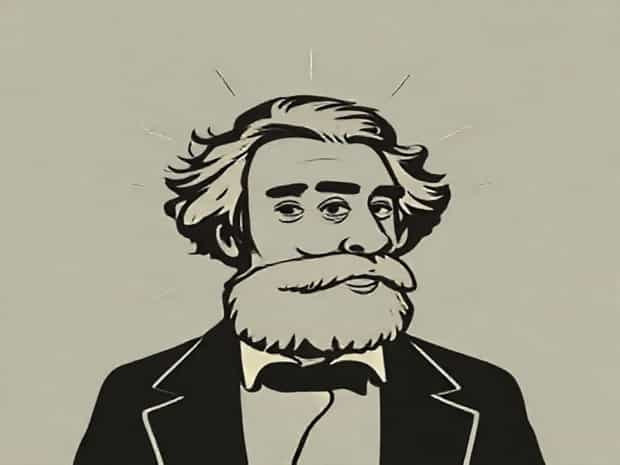
Bertrand Russell Criticism Of Cosmological Argument
Bertrand Russell, one of the most influential philosophers of the 20th century, offered a profound critique of the cosmological argument for the existence of God. His criticisms challenge long-standing assumptions about causality, the nature of the universe, and the logical necessity of a first cause. Russell’s perspective is grounded in empirical reasoning and analytical philosophy, emphasizing careful examination of premises that many traditional arguments for God’s existence take for granted. Understanding Russell’s critique provides insight into modern philosophical debates about the cosmological argument and invites critical thinking about the fundamental nature of reality, causation, and existence itself.
Overview of the Cosmological Argument
The cosmological argument is a classical argument for the existence of God, asserting that everything that exists must have a cause. Philosophers like Thomas Aquinas and, more recently, proponents of the Kalam Cosmological Argument claim that the universe’s existence cannot be self-explanatory and therefore requires a first cause, often identified as God. The argument is grounded in the principle of sufficient reason, which states that everything must have an explanation or cause. It often relies on the intuition that infinite regress is impossible and that a necessary being must exist to account for the contingent universe.
Key Features of the Argument
- Premise 1 Everything that begins to exist has a cause.
- Premise 2 The universe began to exist.
- Therefore, the universe has a cause, often identified as God.
The cosmological argument assumes that causation is universal and applies beyond the observable universe. It also assumes that the universe is contingent and not self-existent. Bertrand Russell challenged these assumptions, arguing that they rest on unexamined premises that cannot be taken as universally valid.
Russell’s Critique of Causation
One of Russell’s central criticisms targets the concept of causation itself. In his essay Why I Am Not a Christian, he famously questioned the necessity of a cause for the universe. Russell argued that while causality applies within the universe where events follow one another there is no justification for extending this principle to the universe as a whole. In other words, it may not be necessary that the universe must have a cause in the same way individual events within the universe do. This challenges the first premise of the cosmological argument and undermines its claim that the universe cannot exist without a cause.
Analogy and Explanation
Russell used analogical reasoning to illustrate his critique. For example, just because every human being has a mother does not mean that humanity as a whole must have a mother. Similarly, while events within the universe are contingent and caused, the universe itself may exist as a brute fact, requiring no external explanation. By highlighting this distinction, Russell draws attention to the logical leap that cosmological arguments make when they move from causation within the universe to causation of the universe.
Critique of the Notion of a First Cause
Another significant point in Russell’s criticism concerns the idea of a first cause or necessary being. Cosmological arguments claim that an uncaused, necessary entity must exist to prevent an infinite regress of causes. Russell questioned why this entity must be God and why the universe itself cannot be the necessary entity. According to Russell, invoking God as the first cause does not resolve the problem of causation; it merely shifts the question. If everything requires a cause, why should God be exempt? If God does not require a cause, perhaps the universe also does not require one. This challenges the notion that a divine being is the only explanation for existence.
The Problem of Special Pleading
Russell’s critique highlights the issue of special pleading, where the cosmological argument exempts God from the rules applied to the universe. This selective application of causality is logically inconsistent. Russell argued that either all things require a cause or none do. By exempting God while insisting the universe requires a cause, the argument introduces an arbitrary exception that weakens its logical coherence. This challenge forces proponents of the cosmological argument to justify why a divine first cause is unique or necessary.
Empirical and Logical Foundations of the Critique
Russell emphasized empirical reasoning and logical analysis in his critique. He argued that philosophical and scientific inquiry must be grounded in observable evidence rather than speculative metaphysics. The cosmological argument often relies on intuitive reasoning about causality and the impossibility of infinite regress, but Russell pointed out that these intuitions are not self-evident truths. Empirical science, particularly in cosmology and physics, suggests that the universe may not follow classical notions of causation at its origin, especially under conditions such as the Big Bang or quantum fluctuations.
Quantum Mechanics and Modern Physics
Although Russell wrote before the development of modern quantum mechanics, his critique resonates with contemporary scientific perspectives. Quantum events, such as virtual ptopics appearing and disappearing, challenge classical notions of causation. If such events can occur without deterministic causes, the assumption that the universe must have a cause is further questioned. Russell’s insistence on logical scrutiny and empirical grounding aligns with modern debates about the applicability of causality beyond the observable universe.
Philosophical Implications of Russell’s Critique
Russell’s criticism of the cosmological argument has broad implications for philosophy of religion and metaphysics. It challenges the assumption that logical reasoning alone can establish the existence of God, emphasizing the limits of human understanding regarding the universe’s origins. His critique encourages a careful examination of fundamental concepts like causality, necessity, and contingency, promoting skepticism toward arguments that move from intuition to metaphysical conclusions without sufficient justification.
Influence on Modern Thought
Russell’s arguments have influenced subsequent debates in philosophy, theology, and science. His critiques are frequently cited by skeptics of cosmological arguments and by those advocating for naturalistic explanations of the universe. Philosophers continue to discuss whether the universe is a brute fact or whether metaphysical principles can explain its existence. Russell’s insistence on rational inquiry and logical consistency remains a cornerstone of contemporary philosophical discourse.
Bertrand Russell’s criticism of the cosmological argument challenges key assumptions about causality, the necessity of a first cause, and the justification for invoking God as the ultimate explanation for the universe. By questioning the applicability of causation beyond the universe and highlighting issues of special pleading, Russell undermines the logical foundation of the argument. His critique encourages a careful and skeptical approach to metaphysical claims, emphasizing empirical evidence and logical consistency over intuitive reasoning. While the cosmological argument continues to be debated and refined, Russell’s analysis remains a significant contribution to the discussion, prompting deeper reflection on the nature of existence, causality, and the limits of human understanding.
Ultimately, Russell’s critique does not necessarily provide a definitive answer to the question of the universe’s origin but reframes the debate. It emphasizes that philosophical arguments must be carefully examined and that assumptions taken for granted may not withstand scrutiny. His work continues to inspire philosophers, scientists, and thinkers to critically assess claims about God, causation, and the cosmos, ensuring that discussions about the cosmological argument remain rigorous, thoughtful, and intellectually honest.