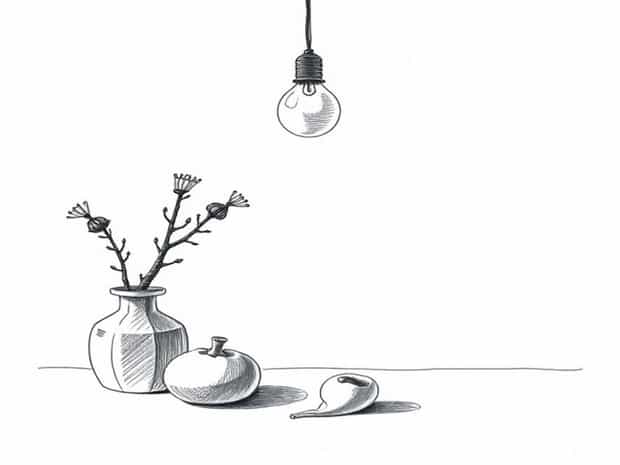
How To Still Life Drawing
Still life drawing is one of the most rewarding and foundational exercises for artists of all levels. By focusing on inanimate objects arranged thoughtfully, artists can practice observation, composition, light, and texture. Whether you are a beginner or an experienced illustrator, learning how to create a compelling still life drawing sharpens your skills in proportion, shading, and perspective. It allows you to explore artistic techniques in a controlled environment, giving you the freedom to experiment with various materials and styles. Mastering still life drawing not only improves technical ability but also enhances your understanding of form, space, and visual storytelling.
Choosing Your Subject
Selecting the right objects is the first step in creating a successful still life drawing. Traditional subjects often include fruits, flowers, vases, bottles, or everyday household items. The key is to choose objects that offer interesting shapes, textures, and contrasts. Variety in size and surface characteristics can make your drawing more dynamic and engaging. Arranging objects thoughtfully is equally important; overlapping, spacing, and layering can create depth and visual interest, helping to guide the viewer’s eye through the composition.
Tips for Selecting Subjects
- Choose items with contrasting shapes and textures
- Include objects of varying sizes for visual balance
- Consider color and tonal variation, even if drawing in monochrome
- Use objects that have personal or symbolic significance for added meaning
- Keep the arrangement simple to avoid overwhelming the composition
Setting Up Your Composition
Once you have chosen your objects, arranging them effectively is essential for a strong still life. Consider the overall balance, perspective, and flow of the composition. Triangular arrangements often work well because they provide stability and guide the viewer’s eye. Think about foreground, middle ground, and background to create a sense of depth. Lighting is also a critical factor; directional light can create shadows and highlights that add dimensionality, while soft, diffused light emphasizes subtle tones and textures.
Composition Tips
- Arrange objects to lead the viewer’s eye through the drawing
- Use overlapping elements to create depth
- Experiment with different angles and perspectives
- Position the light source to enhance shadows and highlights
- Keep the composition balanced but dynamic, avoiding perfect symmetry
Choosing Materials
Your choice of drawing materials can influence the style, texture, and detail of your still life. Common materials include graphite pencils, charcoal, ink, colored pencils, and pastels. Graphite allows for precise lines and subtle shading, while charcoal offers rich, expressive tones. Colored pencils and pastels can capture the vibrancy of objects, especially in colored still life compositions. Paper texture also matters; smooth paper is ideal for fine details, while textured paper enhances expressive strokes and shading.
Materials Overview
- Graphite pencils – good for detailed, realistic drawings
- Charcoal – ideal for bold, dramatic shading and expressive marks
- Ink – creates strong lines and contrast for stylized drawings
- Colored pencils – excellent for vibrant, layered color effects
- Pastels – suitable for soft blending and rich textures
- Paper – choose based on desired texture and technique
Basic Drawing Techniques
Understanding fundamental techniques is crucial for creating a compelling still life drawing. Begin by lightly sketching the basic shapes of your objects using simple geometric forms like circles, rectangles, and ovals. This helps establish proportion and placement. Gradually refine your outlines, adjusting the shapes as needed. Once the structure is correct, focus on shading and texture. Techniques such as hatching, cross-hatching, stippling, and blending can be used to depict light, shadow, and surface details effectively.
Techniques for Depth and Realism
- Hatching and cross-hatching for creating shadows
- Blending with a stump or finger to soften transitions
- Stippling to add texture to rough surfaces
- Layering pencil strokes for subtle tonal variations
- Observing light direction carefully to create realistic shadows
Understanding Light and Shadow
Light and shadow are essential elements in still life drawing. Observing how light interacts with objects helps create a sense of volume and depth. Identify the light source and note how it affects highlights, midtones, and shadows. Cast shadows on surrounding surfaces add realism and anchor objects in space. Reflected light, where light bounces off nearby surfaces, can also be subtle but crucial for a realistic depiction. Practice observing and replicating these nuances to enhance the three-dimensional quality of your work.
Tips for Light and Shadow
- Determine the main light source before starting your drawing
- Observe how shadows change shape and intensity across the object
- Use varying pressure with your pencil to achieve different tones
- Include reflected light for a more realistic effect
- Blend gradually to maintain smooth transitions between light and shadow
Adding Texture and Detail
Texture gives life to your still life drawing by simulating the surface qualities of the objects. Smooth surfaces, rough textures, and intricate patterns all require different approaches. Use directional strokes to follow the contour of the object and enhance its three-dimensional appearance. Observing closely and replicating these details increases realism and makes your drawing more engaging. Remember that the level of detail can be adjusted based on the style you want to achieve, from highly realistic to expressive and stylized.
Tips for Texture
- Use different techniques for different surfaces
- Follow the contour of the object to emphasize form
- Vary line thickness and pressure for realistic texture
- Observe small details and include them selectively
- Experiment with blending and erasing to create highlights and fine textures
Final Touches and Refinement
After completing the main structure, shading, and textures, take time to refine your still life drawing. Review proportions, check the balance of light and dark areas, and make any necessary adjustments. Enhancing contrast in key areas can draw attention and create a more dynamic composition. Consider adding subtle background elements to situate your objects without distracting from the main focus. The final touches often elevate a simple sketch into a polished, visually appealing piece.
Refinement Tips
- Check proportions and perspective before finalizing
- Enhance highlights and darken shadows for depth
- Soften or blend edges as needed
- Consider adding subtle background shading for context
- Step back and view your drawing from a distance to assess overall impact
Practice and Observation
Mastering still life drawing requires consistent practice and careful observation. Set up different arrangements, experiment with various lighting conditions, and explore multiple materials and techniques. Observing real objects closely helps you understand form, texture, and light in a way that imagination alone cannot provide. By regularly practicing, you will develop a keener eye, improve hand-eye coordination, and cultivate your artistic style, ultimately producing more confident and expressive still life drawings.
Practice Strategies
- Create daily or weekly drawing exercises with new objects
- Experiment with different compositions and lighting setups
- Try both quick sketches and detailed studies
- Keep a sketchbook to track progress and ideas
- Review and critique your work to identify areas for improvement
Learning how to do still life drawing is a valuable skill that enhances both technical proficiency and artistic observation. By carefully selecting subjects, arranging compositions thoughtfully, choosing the right materials, mastering shading and texture techniques, and refining your work, you can create compelling and realistic drawings. Consistent practice, attention to light and shadow, and experimentation with different methods will deepen your understanding of form and space. Whether for personal enjoyment or professional development, still life drawing provides endless opportunities to explore creativity and develop your artistic abilities.