How Are Zodiac Constellations Related To The Ecliptic
The night sky has fascinated humans for centuries, and among its most intriguing features are the zodiac constellations. These constellations, often associated with astrology, have a direct connection to a fundamental concept in astronomy known as the ecliptic. Understanding how zodiac constellations relate to the ecliptic is crucial for both amateur stargazers and professional astronomers. The relationship explains not only why certain constellations appear in specific positions at certain times of the year but also provides insight into the apparent motion of the Sun, planets, and Moon across the sky. Exploring this connection combines the study of celestial mechanics, observational astronomy, and historical traditions that date back thousands of years.
Defining the Ecliptic
The ecliptic is an imaginary line that represents the apparent path of the Sun across the sky as seen from Earth over the course of a year. This path is not random but is a projection of Earth’s orbital plane onto the celestial sphere. As Earth revolves around the Sun, the Sun seems to move against the backdrop of stars, tracing out the ecliptic. The ecliptic is tilted at an angle of approximately 23.5 degrees relative to the celestial equator, a tilt that also explains the changing seasons on our planet. Because it is directly tied to Earth’s orbit, the ecliptic serves as a reference for locating celestial objects and understanding the positions of planets and other astronomical phenomena.
Understanding Zodiac Constellations
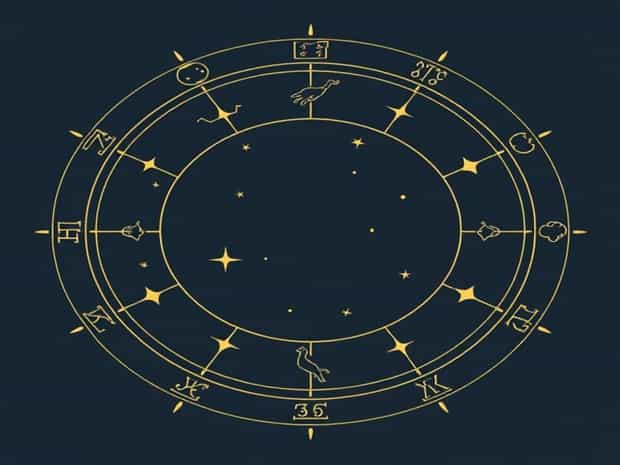
Zodiac constellations are twelve specific constellations that lie along the ecliptic. They include Aries, Taurus, Gemini, Cancer, Leo, Virgo, Libra, Scorpio, Sagittarius, Capricorn, Aquarius, and Pisces. Historically, these constellations were recognized and named by various ancient civilizations, including the Babylonians and Greeks, who used them to track the Sun’s apparent motion and create early calendars. Each zodiac constellation occupies a specific segment of the ecliptic, roughly corresponding to about thirty degrees of the 360-degree circle of the celestial sphere. This segmentation allowed ancient astronomers to predict the Sun’s position at any given time of the year and to create astrological systems that linked celestial positions to human events.
The Sun’s Journey Through the Zodiac
As Earth revolves around the Sun, the Sun appears to move through each zodiac constellation in sequence. This apparent movement, known as the Sun’s apparent annual motion, is a consequence of the changing vantage point from Earth as it completes one orbit around the Sun. For example, in late March, the Sun appears to enter Aries, while in late April it moves into Taurus. This progression continues through the remaining zodiac constellations, returning to Aries approximately one year later. The Sun’s passage through the zodiac is what gives rise to the traditional astrological signs and explains why certain constellations are visible at night only during particular times of the year.
Planets, the Moon, and the Ecliptic
In addition to the Sun, most planets in our solar system also appear to travel near the ecliptic. This is because the planets’ orbits are generally close to the same plane as Earth’s orbit. As a result, the zodiac constellations are not just relevant for the Sun but also serve as a reference framework for locating planets in the night sky. The Moon, with its orbit inclined about 5 degrees to the ecliptic, also crosses these constellations periodically. Observing the positions of planets and the Moon relative to the zodiac can help amateur astronomers predict events such as conjunctions, oppositions, and eclipses, all of which are influenced by the geometry of the ecliptic.
Historical Significance of the Zodiac and Ecliptic
The connection between zodiac constellations and the ecliptic has a rich historical background. Ancient civilizations used the ecliptic and its associated zodiac signs as a celestial calendar. By tracking the Sun’s position against the zodiac, early astronomers could determine the timing of agricultural activities, festivals, and religious ceremonies. This practical application eventually evolved into complex astrological systems, where the Sun’s position in a zodiac constellation at the time of an individual’s birth was believed to influence personality and destiny. While modern astronomy separates scientific observation from astrology, the historical relationship remains an important part of cultural heritage and understanding the development of early science.
Celestial Mechanics and Observational Implications
From a scientific perspective, the alignment of zodiac constellations along the ecliptic has several important implications. Because these constellations mark the Sun’s apparent path, they provide a coordinate system for measuring celestial longitude. Astronomers use this system to chart the positions of celestial objects accurately. Observing the Sun’s movement through the zodiac also allows for precise determination of solstices and equinoxes. Additionally, because the planets orbit near the ecliptic, the zodiac serves as a natural guide for predicting their positions and planning astronomical observations.
Practical Tips for Observing Zodiac Constellations
- Use a star chart or mobile app to identify the current zodiac constellation along the ecliptic.
- Plan observations during nights when the Sun has set, as zodiac constellations are easier to see in dark skies.
- Pay attention to the time of year, as different zodiac constellations are visible at different seasons.
- Note the relative positions of planets near the ecliptic, which often appear close to zodiac constellations.
- Consider using binoculars or a small telescope to enhance details of fainter constellations along the ecliptic.
Modern Astronomical Relevance
Today, astronomers continue to use the ecliptic and zodiac constellations as a practical tool for mapping the sky. Space missions, satellite tracking, and observational astronomy all rely on the geometric framework provided by the ecliptic. While astrology assigns symbolic meaning to zodiac signs, astronomy focuses on the precise positions of celestial objects along the ecliptic. By understanding this connection, both professionals and hobbyists can locate planets, predict eclipses, and study the dynamic interactions of celestial bodies within our solar system.
The relationship between zodiac constellations and the ecliptic illustrates the intricate connections within our solar system and the way ancient humans interpreted the sky. The ecliptic serves as a celestial baseline, while the zodiac constellations act as markers along that path, providing orientation for the Sun, planets, and Moon. From historical calendar-making to modern astronomical observation, this relationship remains fundamental for understanding the apparent motion of celestial bodies. Whether for scientific study or personal interest, exploring how zodiac constellations relate to the ecliptic deepens our appreciation of the night sky and highlights the enduring significance of these celestial patterns.