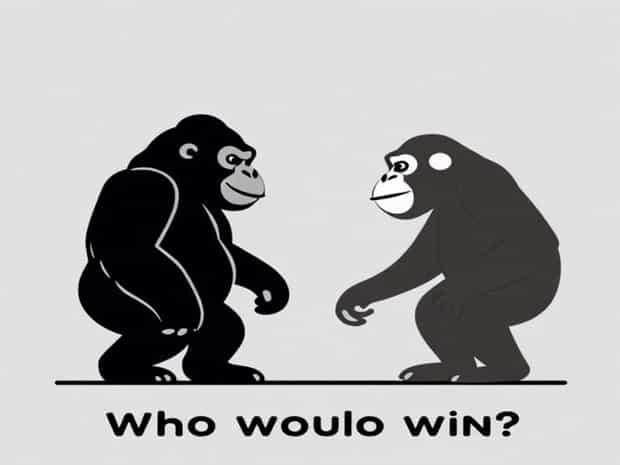
Gorilla Vs Orangutan:Who Would Win
The debate of gorilla versus orangutan has long fascinated wildlife enthusiasts, primatologists, and curious minds alike. Both species are among the largest and most intelligent primates, each with unique physical characteristics, behaviors, and strengths. When considering a hypothetical encounter between a gorilla and an orangutan, many factors come into play, including size, strength, agility, social behavior, and natural instincts. While neither animal is naturally aggressive toward humans or each other in the wild, imagining who would win in a direct confrontation offers insight into their biology, behavior, and adaptations.
Physical Characteristics
Physical attributes are crucial when comparing gorillas and orangutans, as strength, size, and build largely determine combat potential. Understanding these characteristics helps evaluate hypothetical scenarios.
Gorilla Anatomy
Gorillas are the largest living primates, with adult males, known as silverbacks, weighing between 300 to 430 pounds and standing about 5.5 to 6 feet tall when upright. Their muscular build, broad chest, and powerful arms provide exceptional strength, capable of lifting and throwing significant weights. Gorillas have large canine teeth, which serve as defensive tools during confrontations with rivals or predators. Their physical power is complemented by endurance and resilience, making them formidable opponents in any physical encounter.
Orangutan Anatomy
Orangutans are generally smaller than gorillas, with adult males weighing between 165 to 220 pounds and standing approximately 4.5 to 5 feet tall. Their bodies are adapted for an arboreal lifestyle, with long, strong arms that allow them to swing effortlessly between trees. Orangutans have a leaner, more flexible build, which enhances agility rather than raw strength. They also have powerful hands and feet capable of grasping branches firmly, giving them leverage in both climbing and defensive maneuvers.
Strength and Power
When assessing who would win in a hypothetical confrontation, raw strength and power are key considerations. Gorillas are widely recognized for their immense physical strength, with estimates suggesting that a silverback can lift over 1,800 pounds in certain conditions. Their power is concentrated in their upper body, particularly in their arms and chest, allowing them to deliver devastating blows and grapple effectively.
Orangutans, although strong, rely more on technique and leverage than brute force. Their strength is optimized for swinging, climbing, and manipulating objects rather than engaging in ground combat. While they can deliver powerful strikes using their arms or even bite when threatened, their overall muscle mass and force generation are generally less than that of a gorilla.
Behavioral Differences
Behavior and temperament also play a significant role in hypothetical encounters. Gorillas are social animals living in cohesive family groups, led by a dominant silverback. The silverback is responsible for protecting the group and may display aggressive behavior when threatened. Gorillas are territorial but typically use intimidation displays, such as chest-beating and vocalizations, to avoid actual physical confrontations.
Orangutans are more solitary, spending most of their lives alone except for mothers and dependent offspring. They are intelligent and cautious, often avoiding unnecessary conflicts. When threatened, an orangutan may use vocalizations, branch-swinging, and biting to defend itself. Their intelligence and problem-solving ability may allow them to evade a stronger opponent rather than engage directly.
Combat Scenarios
In a hypothetical one-on-one encounter, several factors would influence the outcome. Size and strength strongly favor gorillas, giving them an advantage in physical dominance. A gorilla’s superior muscle mass, powerful arms, and weight could overpower an orangutan in close combat. Their defensive adaptations, including thick skin and strength, make them difficult opponents.
Orangutan Tactics
Orangutans might rely on agility, intelligence, and environmental manipulation in a confrontation. Their ability to climb, swing, and maneuver in trees allows them to avoid direct strikes. An orangutan could potentially use branches as weapons or leverage their reach to keep distance. While they possess defensive capabilities, they are less equipped for sustained ground combat against a physically stronger gorilla.
Gorilla Tactics
Gorillas rely on brute strength, intimidation, and physical dominance. In a confrontation, a silverback may attempt to overpower an opponent quickly through grappling, chest-beating, and powerful swipes. Their mass and strength give them a distinct advantage in controlling territory or deterring potential threats. In a ground-based scenario, gorillas are more likely to succeed against an orangutan due to raw power and aggressive displays.
Environmental Factors
The environment in which the encounter occurs can also influence outcomes. In dense forests with many trees, an orangutan’s arboreal skills could provide a tactical advantage, allowing it to evade attacks or use height for defense. In open terrain, where climbing and swinging are limited, a gorilla’s size and strength dominate. Environmental context is essential for understanding potential interactions, as both species are adapted to specific ecological niches.
Intelligence and Strategy
Both gorillas and orangutans are highly intelligent primates, capable of problem-solving, planning, and using tools. Intelligence could influence a hypothetical encounter, particularly for orangutans, who may employ strategy to avoid direct conflict. While intelligence alone cannot overcome raw physical power, it can help an orangutan escape, defend itself effectively, or exploit environmental advantages.
Who Would Win?
In a theoretical ground-based confrontation, gorillas are generally considered more likely to win due to superior size, strength, and physical dominance. Their muscular build, aggressive capabilities, and defensive adaptations provide a significant advantage over an orangutan in close combat. However, orangutans possess agility, intelligence, and arboreal skills that could allow them to evade or defend against a stronger opponent in certain situations. Ultimately, the outcome would depend on the environment, the individuals involved, and their specific behavior and tactics.
It is important to note that in the wild, gorillas and orangutans live in separate geographic regions and have little to no chance of encountering each other. Their behaviors are adapted to survival in their respective habitats, not for fighting each other. Comparing the two species in a hypothetical fight provides insight into their physical and behavioral traits but does not reflect their natural interactions. Both gorillas and orangutans are remarkable creatures, each with strengths and adaptations that have allowed them to thrive in their ecosystems. Admiring these primates for their intelligence, strength, and unique behaviors offers a more meaningful perspective than imagining conflict between them.