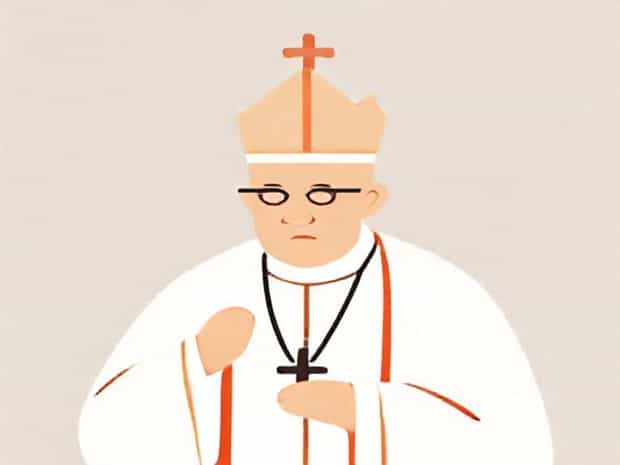
Can A Pope Be Excommunicated
The question of whether a pope can be excommunicated is one that has intrigued theologians, historians, and Catholics for centuries. As the spiritual leader of the Roman Catholic Church, the pope holds a unique position of authority and influence, being regarded as the Vicar of Christ on Earth. Excommunication is a severe ecclesiastical penalty that removes a person from the communion of the Church, barring them from participating in the sacraments and certain aspects of religious life. While excommunication is a common disciplinary measure for clergy and laity alike under canon law, the idea of applying it to a pope raises complex theological, legal, and historical questions that challenge the very structure of Church authority.
Understanding Excommunication in the Catholic Church
Excommunication is not intended as a form of punishment in the human sense but as a medicinal penalty aimed at encouraging repentance and reconciliation with God and the Church. It is typically reserved for grave offenses against Church doctrine, canon law, or moral conduct. Canon law, which governs the operations and discipline of the Catholic Church, outlines specific actions that can incur automatic or formal excommunication, such as heresy, apostasy, schism, or violations of certain sacraments.
Types of Excommunication
Excommunication in the Catholic Church comes in two primary forms
- Automatic (latae sententiae)This occurs by the very commission of the offense without the need for a formal declaration. Examples include desecrating the Eucharist or committing abortion.
- Declared (ferendae sententiae)This type is formally imposed by a Church authority after a canonical process, often involving investigation and trial.
The Pope’s Unique Position
The pope, as the supreme pontiff, occupies a position of supreme ecclesiastical authority. Canon law recognizes the pope as having full, supreme, and universal power over the Church, making him the final authority on matters of doctrine and discipline. This unique status raises the question if the pope is the source of Church law and authority, who could possibly excommunicate him? Theoretically, excommunicating a pope would require a higher authority, yet within Catholic theology, there is no higher human authority than the pope himself.
Theological Considerations
The Catholic Church teaches that the pope, when speaking ex cathedra on matters of faith and morals, is protected by the doctrine of papal infallibility. While infallibility applies only in specific doctrinal pronouncements, it implies that the pope holds a sacred responsibility that shields him from certain forms of ecclesiastical censure. Some theologians argue that because the pope cannot be judged by any earthly authority within the Church, he cannot be formally excommunicated. However, this does not imply that a pope is beyond moral or spiritual accountability; it simply means that the canonical mechanism of excommunication does not straightforwardly apply.
Historical Precedents and Hypothetical Cases
Throughout history, there have been instances where popes were threatened with or accused of excommunication, though these cases often involved complex political and theological disputes rather than formal canonical action. For example, during the medieval period, conflicts between popes and secular rulers occasionally led to mutual threats of excommunication, but the enforcement against a sitting pope was never clearly realized. These historical examples highlight the tension between spiritual authority and human mechanisms of accountability.
Resignation and Accountability
The modern example of Pope Benedict XVI’s resignation in 2013 demonstrates another layer of accountability. While he was not excommunicated, the pope voluntarily relinquished his office, showing that the papacy allows for internal mechanisms of responsibility beyond formal penalties. In theory, if a pope were to commit an act considered gravely immoral or heretical, the Church might seek alternative means of addressing the situation, such as invoking resignation or issuing doctrinal clarification to limit the impact of the pope’s actions.
Canon Law and the Limits of Excommunication
Canon law (specifically the 1983 Code of Canon Law) does not explicitly provide a process for excommunicating a pope. Canon 332 §2, however, allows for a pope to resign, suggesting that voluntary abdication is the primary canonical mechanism for addressing serious concerns about papal conduct. The law implicitly acknowledges the pope’s supreme authority while providing a pathway for accountability that respects the unique nature of the papal office. Some scholars argue that a pope who commits heresy could be considered automatically separated from the Church in a spiritual sense, though practical enforcement would be extraordinarily complicated.
Debates Among Theologians
The question of papal excommunication has inspired extensive debate among canon lawyers and theologians. Some argue that if a pope were to formally reject core Church doctrine, he would, in effect, excommunicate himself, as canonical and theological norms define heresy as a self-imposed separation from the Church. Others suggest that extraordinary measures, such as a council of bishops, might theoretically declare a pope deposed in cases of extreme heresy or schism, though this remains largely speculative and has no modern precedent.
Implications for the Catholic Church
Discussing whether a pope can be excommunicated is not merely an academic exercise; it reflects deep concerns about moral authority, accountability, and the integrity of the Church. While practical mechanisms for excommunicating a pope are absent, the Church relies on theological principles, historical precedent, and internal moral checks to address potential crises. The question also highlights the delicate balance between the pope’s supreme authority and the need for the Church to maintain doctrinal unity and spiritual credibility.
the question of whether a pope can be excommunicated reveals the complexity of Catholic theology, canon law, and Church history. While formal excommunication of a sitting pope is not practically enforceable, theological discussions suggest that a pope who commits heresy or grave moral wrongdoing could, in principle, face spiritual separation from the Church. Historical precedents, canonical structures, and modern examples of papal resignation provide alternative avenues for accountability. Ultimately, the concept underscores the unique nature of the papal office, blending supreme authority with profound responsibility to uphold the faith and moral integrity of the Church.
The topic of papal excommunication remains both fascinating and controversial, encouraging deeper reflection on the limits of human authority within a religious framework. While no pope has been formally excommunicated, the theoretical discussions serve as a reminder that spiritual leaders, regardless of rank, are called to adhere to the teachings and moral standards of their faith, maintaining the delicate balance between authority and accountability within the Catholic Church.