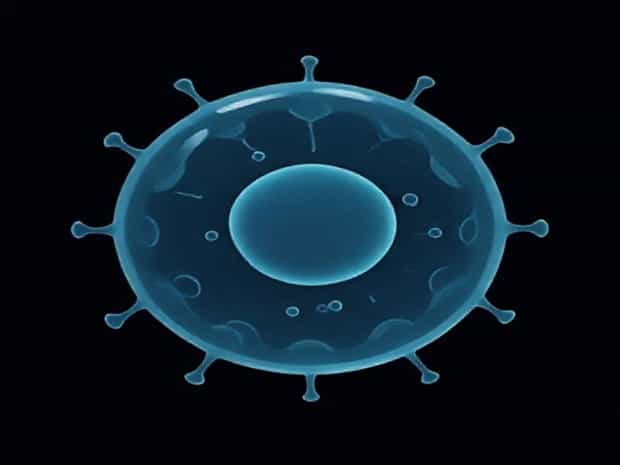
Is Nuclei A Cell
The nucleus is often mistakenly referred to as a cell, but it is not. It is a vital organelle found within eukaryotic cells that serves as the control center for the cell’s activities. The nucleus contains the cell’s genetic material in the form of DNA and is responsible for regulating processes such as growth, metabolism, protein synthesis, and cell division. While it is an essential part of the cell, it is only one component, and a single cell consists of many organelles and structures working together to maintain life.
Understanding the Nucleus
The nucleus is a membrane-bound organelle that houses the cell’s chromosomes. It is surrounded by a double membrane called the nuclear envelope, which separates the contents of the nucleus from the cytoplasm. Nuclear pores in the envelope allow the exchange of materials, such as RNA and proteins, between the nucleus and the rest of the cell. The nucleus plays a central role in controlling cellular activities by directing gene expression and mediating the replication of DNA during the cell cycle.
Structure of the Nucleus
- Nuclear envelope Double membrane that encloses the nucleus and controls material exchange.
- Nucleoplasm Gel-like substance inside the nucleus that contains chromatin and the nucleolus.
- Chromatin DNA and protein complex that carries genetic information.
- Nucleolus Dense structure responsible for ribosomal RNA synthesis and ribosome assembly.
- Nuclear pores Channels that allow communication and transport of molecules between the nucleus and cytoplasm.
Functions of the Nucleus
The nucleus is critical for the proper functioning of eukaryotic cells. It regulates cellular activities, maintains genetic integrity, and ensures that the cell can respond to its environment. By controlling the synthesis of proteins through the transcription of DNA to RNA, the nucleus determines the structure and function of the cell. Additionally, the nucleus orchestrates cell division, ensuring that genetic material is accurately replicated and distributed to daughter cells.
Key Functions
- Storage of genetic material in the form of DNA.
- Regulation of gene expression to control cell functions.
- Replication of DNA during cell division.
- Assembly of ribosomal subunits in the nucleolus.
- Coordination of cellular activities such as growth, metabolism, and response to signals.
Nucleus vs. Cell
It is important to distinguish between a nucleus and a cell. The nucleus is an organelle, whereas a cell is the smallest functional unit of life. A cell contains multiple organelles, including the nucleus, mitochondria, endoplasmic reticulum, Golgi apparatus, and lysosomes, all enclosed within a plasma membrane. While the nucleus controls many functions within the cell, it cannot exist independently outside of a cell. The cell, in contrast, is a self-contained unit capable of performing all life processes.
Comparison Table
- NucleusMembrane-bound organelle, contains DNA, controls cell activities, cannot survive independently.
- CellBasic unit of life, contains organelles including the nucleus, capable of independent survival and reproduction.
Types of Nuclei in Cells
Not all nuclei are identical. Depending on the cell type and species, nuclei may vary in size, number, and function. Most eukaryotic cells have a single nucleus (mononuclear), but some cells, such as skeletal muscle cells, are multinucleated. Additionally, certain specialized cells may temporarily lose their nuclei during differentiation, like red blood cells in mammals, which eject their nucleus to maximize space for hemoglobin.
Examples
- Mononuclear cells Typical eukaryotic cells such as liver or skin cells.
- Multinucleated cells Skeletal muscle fibers, some fungal cells.
- Anucleated cells Mature mammalian red blood cells lacking nuclei.
Role in Cell Division
The nucleus is essential during both mitosis and meiosis. It ensures that genetic material is duplicated and distributed accurately to daughter cells. During cell division, the nuclear envelope disassembles, allowing chromosomes to align and segregate. After division, the nuclear envelope re-forms around each set of chromosomes, creating new nuclei for the daughter cells. This process underscores the nucleus’s central role in maintaining genetic continuity and cellular integrity.
Cell Cycle Involvement
- Interphase DNA replication occurs within the nucleus.
- Prophase Chromatin condenses into visible chromosomes, nuclear envelope begins to break down.
- Metaphase Chromosomes align in the cell center, nucleus temporarily absent.
- Anaphase & Telophase Chromosomes separate, nuclear envelope re-forms around new nuclei.
Common Misconceptions
Many people confuse the nucleus with a cell, possibly because it is central to cell function and contains DNA. However, the nucleus cannot carry out life processes alone and relies on other organelles within the cell to sustain life. Understanding this distinction is critical for biology students and anyone studying cellular structures, as it forms the foundation for concepts in genetics, physiology, and molecular biology.
Clarifications
- The nucleus is an organelle, not a self-sufficient living unit.
- A cell includes multiple organelles that interact to maintain life.
- Removal of the nucleus from a cell typically leads to cell death over time.
- Functions like energy production and waste management occur outside the nucleus.
the nucleus is a fundamental organelle within eukaryotic cells that manages genetic material and orchestrates cellular activities. While it is essential for the life and function of a cell, it is not a cell itself. The cell encompasses the nucleus along with other organelles, making it the smallest independent unit of life. Distinguishing between a nucleus and a cell is crucial for understanding cellular biology, genetics, and the mechanisms that sustain living organisms. The nucleus, while powerful and central to cell regulation, cannot replace the complete system of the cell that enables life to continue.