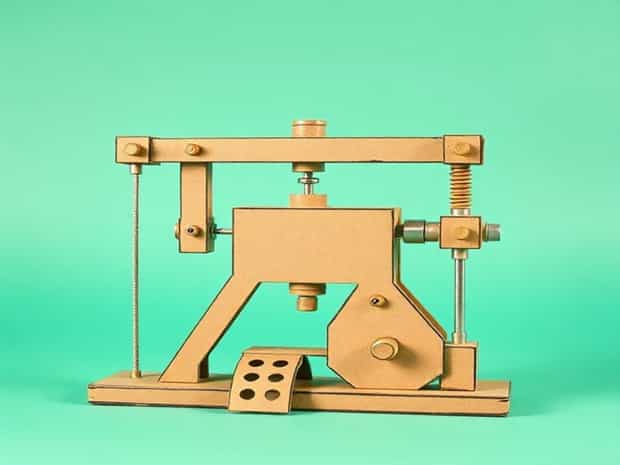
Cardboard Rube Goldberg Machine
Creating a cardboard Rube Goldberg machine is one of the most enjoyable ways to mix creativity, problem-solving, and hands-on building. These whimsical contraptions take simple tasks and make them delightfully complex by connecting a series of chain reactions. Using cardboard as the primary building material adds accessibility since it is inexpensive, easy to cut, and widely available. Whether for a school project, a fun weekend activity, or even an artistic display, a cardboard Rube Goldberg machine can turn ordinary objects into an extraordinary sequence of events that captures both imagination and engineering principles.
What is a Rube Goldberg Machine?
A Rube Goldberg machine is a device that performs a simple task in an overly complicated way through a chain of events. Named after the American cartoonist Rube Goldberg, these machines are celebrated for their humor, creativity, and unnecessary complexity. For example, turning off a light switch might involve a rolling ball, swinging pendulum, falling dominoes, and a string tied to a lever.
The Role of Cardboard
Cardboard is a versatile and lightweight material, making it ideal for constructing the ramps, levers, and chutes needed for such machines. It is easy to shape, glue, or tape, and allows builders to experiment quickly without requiring expensive tools or materials.
Why Build a Cardboard Rube Goldberg Machine?
There are many reasons to build one of these creative machines, especially with cardboard as the main resource
- Educational ValueDemonstrates concepts such as gravity, momentum, friction, and simple machines.
- AccessibilityCardboard is cheap and widely available from packaging and household materials.
- CreativityEncourages imaginative problem-solving by designing unique chain reactions.
- EntertainmentThe process of watching a complex machine achieve a simple result is endlessly amusing.
Planning a Cardboard Rube Goldberg Machine
Before building, planning is essential to ensure the sequence flows smoothly. A good plan outlines the steps, available materials, and intended final action of the machine.
Choosing the Final Task
The most important decision is the final action the machine will perform. Some common examples include
- Ring a bell
- Pop a balloon
- Knock over a cup
- Turn off a switch
- Drop a marble into a container
Sketching the Sequence
A rough sketch helps visualize the chain reaction. It doesn’t need to be perfect, but it should show how one step triggers the next. For example, a rolling marble could hit a domino, which then tips over a lever made of cardboard, releasing a ball down a ramp.
Breaking Down the Steps
Each part of the sequence should rely on simple mechanics. Using cardboard, you can create
- Ramps for rolling marbles or balls
- Levers made from strips of cardboard and a pivot point
- Funnels that guide objects in a specific direction
- Cardboard towers for domino-like effects
- Trigger flaps that release objects
Materials Needed
One of the advantages of building with cardboard is that most materials are already found at home. Some essential items include
- Cardboard boxes, sheets, and scraps
- Scissors, box cutters, or craft knives (with safety precautions)
- Glue, tape, or hot glue gun for assembly
- Marbles, ping pong balls, or small toy cars
- String or yarn for pull mechanisms
- Paper cups, straws, and rubber bands for added creativity
Building Techniques
Constructing a cardboard Rube Goldberg machine requires some basic building techniques to ensure stability and precision.
Creating Strong Ramps
Ramps are central to guiding balls or objects. Cut strips of cardboard and fold up the sides to keep the objects from rolling off. Support the ramps with triangular cardboard braces for added strength.
Making Levers
A lever can be created by piercing a cardboard strip with a skewer or pencil, allowing it to pivot. When a weight falls on one end, the other end rises, triggering the next action.
Stabilizing Towers
Domino-like towers or obstacles can be built by stacking cardboard pieces vertically. Secure them with tape to prevent unintended collapsing before the machine is activated.
Examples of Cardboard Rube Goldberg Machine Steps
Here are some fun ideas that can be incorporated into a cardboard design
- A marble rolling down a cardboard ramp hits a domino sequence.
- Falling dominoes push a cardboard lever to release a ball.
- The ball drops into a cardboard funnel, guiding it to the next step.
- A swinging pendulum made from cardboard and string strikes another object.
- A rubber band-powered flap knocks over a cup of marbles, continuing the chain.
Common Challenges and Solutions
Building a cardboard Rube Goldberg machine is rewarding, but it comes with trial and error. Some issues and solutions include
- Objects not rolling smoothlyAdjust the angle of ramps or smooth the cardboard surface.
- Dominoes falling prematurelySecure them with small tabs of tape until testing.
- Weak jointsReinforce with glue or additional cardboard strips.
- Unreliable triggersTest each step individually before connecting them all.
Educational Benefits
Cardboard Rube Goldberg machines are not just playful; they are also highly educational. They teach principles of physics such as energy transfer, inertia, momentum, and balance. Students also learn about engineering design cycles, as they must brainstorm, prototype, test, and improve their machines. Working in groups encourages collaboration and communication.
Tips for Success
- Start small and gradually add more steps.
- Test each section before combining them into a full machine.
- Use plenty of supports to keep ramps and levers stable.
- Incorporate a variety of actions, such as rolling, tipping, swinging, and dropping.
- Have patience; trial and error is part of the process.
Creative Applications
A cardboard Rube Goldberg machine can be more than just a school project. It can be used in science fairs, as a fun installation for community events, or even as an artistic piece showcasing the beauty of complexity. Some enthusiasts even film their machines to share online, inspiring others to create their own.
Building a cardboard Rube Goldberg machine combines fun, creativity, and learning in a unique way. It allows builders to transform simple materials into a chain reaction of events that accomplish a basic task in the most entertaining fashion possible. From planning and sketching to testing and refining, the process is as rewarding as the final performance. With cardboard as the foundation, the possibilities are nearly endless, limited only by imagination and patience. Whether for education, entertainment, or creativity, these machines prove that complexity can be built from the simplest materials.
Word count ~1020