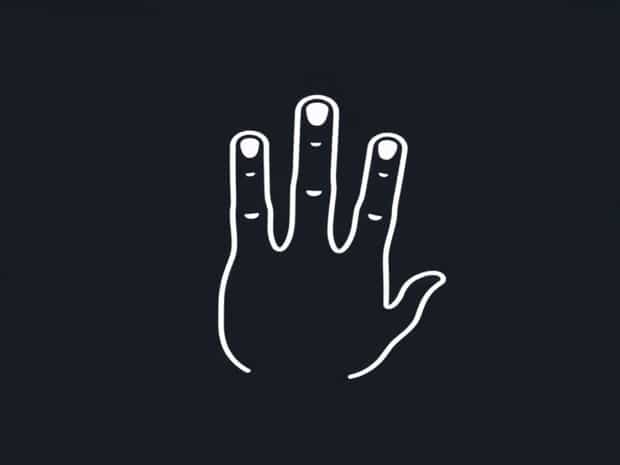
Middle Phalanges Of Fingers
The middle phalanges of the fingers are integral components of the human hand, playing a crucial role in movement, dexterity, and everyday function. Positioned between the proximal and distal phalanges, these small bones enable the bending and flexing of the fingers, allowing humans to grasp, hold, and manipulate objects with precision. Understanding their anatomy, function, and common injuries provides valuable insight for medical professionals, physiotherapists, and anyone interested in human biomechanics. Despite their small size, the middle phalanges are essential for fine motor skills, contributing to activities ranging from typing and writing to playing musical instruments.
Anatomy of the Middle Phalanges
The middle phalanges are the intermediate bones in the four fingers of the hand, excluding the thumb, which only has proximal and distal phalanges. Each middle phalanx connects proximally to the proximal phalanx and distally to the distal phalanx via interphalangeal joints. These bones are long, narrow, and somewhat cylindrical, with slight flattening on the dorsal and palmar surfaces. The proximal end typically features a concave articulation surface, while the distal end has a convex surface that interfaces with the next phalanx. This structure allows for smooth hinge-like movements crucial for finger flexion and extension.
Bone Structure and Composition
Composed primarily of compact bone surrounding a central marrow cavity, middle phalanges are strong yet lightweight. The bone’s exterior provides rigidity to withstand mechanical stress, while the marrow cavity facilitates the production of blood cells. The dorsal surface serves as an attachment site for extensor tendons, whereas the palmar surface is associated with flexor tendons. These tendon attachments, combined with the joint articulations, allow coordinated movements that are vital for hand functionality.
Joints and Movements
The middle phalanges are connected to neighboring bones via two primary joints the proximal interphalangeal (PIP) joint and the distal interphalangeal (DIP) joint. The PIP joint links the middle phalanx to the proximal phalanx, while the DIP joint connects it to the distal phalanx. Both are hinge-type synovial joints that allow flexion and extension movements, enabling precise manipulation of objects. Ligaments and tendons surrounding these joints provide stability and control, preventing hyperextension or excessive lateral movement.
Flexor and Extensor Tendons
Muscular control over the middle phalanges is achieved through the coordinated action of flexor and extensor tendons. The flexor digitorum superficialis inserts into the middle phalanx, allowing the finger to bend at the PIP joint. In contrast, the extensor digitorum tendon runs along the dorsal surface, facilitating straightening and extension. The balance between these tendons is crucial for performing complex hand movements, such as gripping a pen or playing a stringed instrument. Injuries to these tendons can significantly impair finger mobility and overall hand function.
Functional Importance
The middle phalanges are central to the hand’s ability to perform fine motor tasks. They allow for intricate movements required in daily activities, including writing, typing, cooking, and using tools. Their articulations also enable the hand to conform to objects of varying shapes and sizes, providing a secure grip. The range of motion at the PIP and DIP joints contributes to hand dexterity, making these bones indispensable for tasks that demand precision and coordination.
Grip and Manipulation
Middle phalanges play a significant role in different types of grips, such as power grips and precision grips. In a power grip, the middle phalanges help wrap the fingers around objects, while in a precision grip, they facilitate small, controlled movements. Their ability to bend and extend enables the hand to adjust pressure, angle, and positioning, which is essential for tasks like threading a needle or picking up small items. This versatility demonstrates the functional significance of these seemingly small bones in everyday life.
Common Injuries and Conditions
Due to their exposed location and frequent use, middle phalanges are prone to various injuries, including fractures, dislocations, and tendon damage. Trauma from falls, sports, or accidents can result in middle phalanx fractures, which may require immobilization, splinting, or even surgical intervention. Conditions like arthritis can affect the PIP and DIP joints, leading to pain, stiffness, and reduced mobility. Tendon injuries, such as mallet finger, occur when the extensor tendon is damaged near the distal end of the middle phalanx, impairing finger extension.
Diagnosis and Treatment
Medical assessment of middle phalangeal injuries typically involves physical examination, X-rays, and sometimes MRI scans to evaluate bone alignment and tendon integrity. Treatment depends on the injury type and severity. Minor fractures may be managed with splints or casts, while displaced fractures or tendon ruptures often require surgical intervention. Rehabilitation, including physiotherapy and hand exercises, is crucial for restoring range of motion, strength, and fine motor skills. Early intervention improves outcomes and minimizes long-term functional impairment.
Development and Growth
During human development, middle phalanges form through endochondral ossification, where cartilage gradually converts to bone. Growth plates, or epiphyseal plates, located at the ends of the phalanges, contribute to bone lengthening during childhood and adolescence. These growth plates close upon reaching skeletal maturity, solidifying the phalanges’ final size and shape. Understanding this developmental process is important in pediatric care, as injuries to the growth plates can affect finger length and joint function.
Comparative Anatomy
Middle phalanges are a feature of human hands, but they are also present in the fingers of many primates, reflecting evolutionary adaptation for grasping and manipulation. Unlike the thumb, which lacks a middle phalanx, other fingers utilize this intermediate bone to enhance flexibility and precision. Comparative studies show that the presence and structure of middle phalanges contribute to the unique dexterity observed in humans, enabling tasks that require fine motor skills, from tool use to artistic creation.
The middle phalanges of the fingers are small yet indispensable bones that play a pivotal role in hand function. Their anatomical structure, joint articulations, and tendon connections allow a wide range of movements essential for daily tasks, professional activities, and artistic endeavors. Injuries or conditions affecting these bones can significantly impair dexterity, highlighting their importance in both medical and functional contexts. Understanding the anatomy, function, and potential issues associated with middle phalanges provides valuable insight for healthcare professionals, educators, and individuals seeking to maintain hand health.
Overall, the middle phalanges exemplify the complexity and adaptability of the human hand. Through precise coordination with proximal and distal phalanges, muscles, and tendons, they enable a remarkable range of motion and fine motor control. Whether performing delicate tasks, manipulating tools, or engaging in recreational activities, these bones are central to the versatility and capability of the human hand. Recognizing their significance reinforces the importance of protecting, studying, and caring for the middle phalanges to maintain optimal hand functionality throughout life.