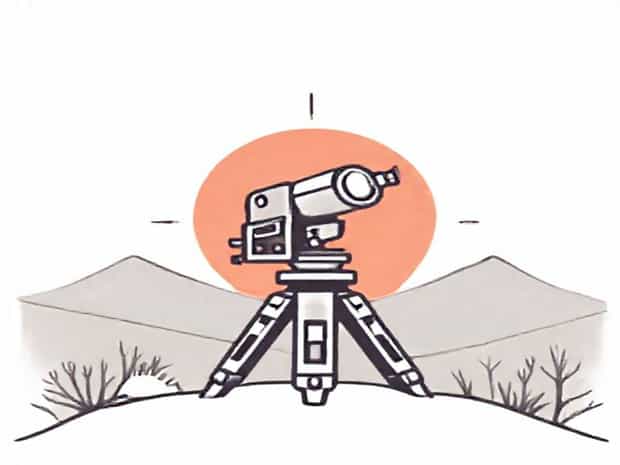
Methods Of Traversing By Theodolite
Surveying plays a crucial role in civil engineering, construction, and mapping projects, and one of the essential instruments used in this field is the theodolite. Traversing is a widely adopted method in surveying to establish control networks and determine the relative positions of points on the earth’s surface. By applying methods of traversing with a theodolite, surveyors can achieve high levels of accuracy and reliability in their measurements. Understanding these methods is vital for students, professionals, and enthusiasts who want to grasp the fundamentals of land surveying.
Understanding Traversing in Surveying
Traversing is a process in surveying where a series of straight lines are measured and connected between fixed points. Each line is measured for both its length and its direction. Theodolites are used to measure horizontal and vertical angles with precision, making them essential tools in traversing. Traverses can be open or closed, depending on whether they return to the starting point or not.
Types of Traverses
- Open TraverseA line of connected survey lines that does not return to the starting point, often used for roads, pipelines, and other linear projects.
- Closed TraverseA traverse that forms a closed polygon, returning to its starting point, typically used for boundary surveys and property mapping.
Role of Theodolite in Traversing
Theodolites are optical instruments designed to measure horizontal and vertical angles. They provide the accuracy needed for traversing and help in determining bearings, azimuths, and relative positioning of points. By setting up a theodolite at survey stations, surveyors can record angle measurements and calculate coordinates of points in the field.
Methods of Traversing by Theodolite
There are several methods of traversing that involve the use of a theodolite. The choice of method depends on the project requirements, desired accuracy, and the type of terrain. Below are the most common methods used by surveyors
1. Chain Traversing with Theodolite
This is one of the simplest methods where chain or tape measurements are combined with angular measurements taken from the theodolite. The lengths of lines are measured using a chain, and the angles are measured with the instrument. It is suitable for smaller projects where moderate accuracy is acceptable.
2. Compass-Theodolite Traversing
In this method, a compass attached to the theodolite is used to determine the bearings of survey lines. Theodolite provides angle accuracy, while the compass helps in orientation. However, this method can be affected by local magnetic attraction and is less reliable for high-precision work.
3. Transit Rule Method
The transit rule method is used in closed traverses to balance the traverse by adjusting latitudes and departures. Theodolite angles are measured and used to compute bearings, while distances are recorded with tapes or electronic devices. This method helps in reducing cumulative errors across the traverse.
4. Bowditch Method
The Bowditch method, also known as the compass rule, is a balancing method applied to closed traverses. It assumes that the errors in linear and angular measurements are proportional to the lengths of traverse lines. This method uses theodolite data to calculate adjusted coordinates for accuracy.
5. Crandall Method
The Crandall method is another balancing technique for traverses, where corrections are applied systematically to minimize angular and linear discrepancies. Theodolites ensure high angular precision, making the corrections more reliable. This method is especially suitable for large control surveys where accuracy is paramount.
6. Direct Angle Measurement Method
In this method, theodolites are used directly to measure horizontal angles between successive survey lines. Combined with distance measurements, this technique is straightforward and widely adopted. It is commonly used in engineering surveys and mapping projects.
Steps in Conducting Theodolite Traversing
To ensure reliable results, traversing with a theodolite follows a systematic process
- Station SetupEstablish survey stations along the route and mark them clearly.
- Instrument CenteringPlace the theodolite exactly over the station point using a plumb bob or optical plummet.
- LevelingAdjust the theodolite to ensure it is perfectly level for accurate angle readings.
- Angle MeasurementMeasure horizontal and vertical angles at each station.
- Distance MeasurementRecord line lengths using tapes, chains, or electronic distance measurement (EDM) devices.
- Recording DataEnter all readings in a field book with proper notation.
- ComputationUse field data to calculate bearings, coordinates, and adjustments.
Applications of Theodolite Traversing
Theodolite traversing is widely applied in different fields of engineering and land surveying. Some common applications include
- Mapping boundaries for land parcels and property.
- Designing and laying out roads, canals, and pipelines.
- Construction site layout and alignment of structures.
- Establishing control networks for topographic surveys.
- Monitoring deformation and movement in large engineering projects.
Advantages of Using Theodolite for Traversing
Using a theodolite provides several advantages over traditional methods
- High precision in measuring angles and directions.
- Versatility in different types of traverses.
- Ability to handle large projects with accuracy.
- Compatibility with modern electronic distance measurement devices.
Limitations and Challenges
Despite its benefits, traversing with a theodolite has certain limitations
- Requires skilled personnel for setup and operation.
- Errors in centering or leveling can affect accuracy.
- Environmental factors like wind, heat, and uneven terrain may cause difficulties.
- Time-consuming compared to GPS-based modern surveying techniques.
Methods of traversing by theodolite remain fundamental in surveying, even with the advent of advanced technology like GPS and total stations. Understanding chain traversing, transit rule, Bowditch method, Crandall method, and other techniques helps surveyors achieve accurate and reliable measurements. While challenges exist, theodolite traversing continues to play a key role in construction, boundary mapping, and engineering projects where precision is vital. For anyone interested in surveying, mastering these methods offers a strong foundation for both academic study and professional practice.