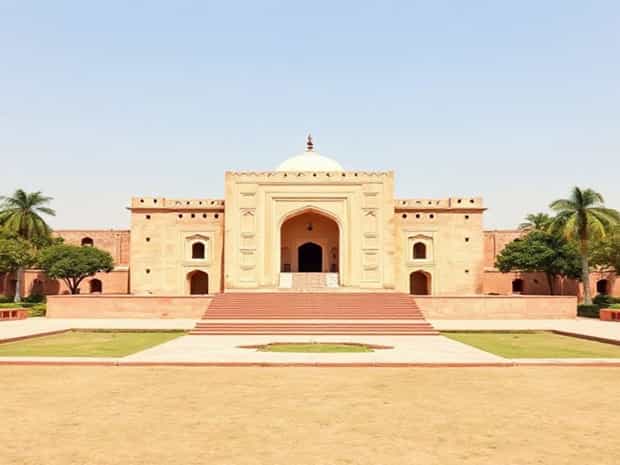
About Jantar Mantar Jaipur
Jantar Mantar in Jaipur is one of the most remarkable historical observatories in India, showcasing the ingenuity and scientific knowledge of the 18th century. Built by Maharaja Sawai Jai Singh II, the ruler of Jaipur, this astronomical observatory represents a blend of architectural beauty and scientific precision. Located in the heart of Jaipur, Rajasthan, it is a significant cultural and educational landmark that attracts scholars, tourists, and astronomy enthusiasts from around the world. The observatory offers a fascinating glimpse into ancient Indian astronomy and the methods used to study celestial objects before modern technology.
History of Jantar Mantar Jaipur
Jantar Mantar Jaipur was constructed in the early 18th century, between 1724 and 1730, under the guidance of Maharaja Sawai Jai Singh II. Jai Singh II was a visionary ruler with a keen interest in astronomy, mathematics, and science. He commissioned the construction of five observatories across India, with Jaipur’s being the largest and best preserved. The purpose of Jantar Mantar was to compile astronomical tables and to predict the movement of celestial bodies with accuracy. The observatory played a crucial role in timekeeping, astrology, and navigation during that period.
Architectural Design
The design of Jantar Mantar Jaipur is unique and stands out as an architectural marvel. Unlike conventional buildings, it consists of a collection of nineteen fixed astronomical instruments, each with a specific purpose. These instruments were built with local materials, primarily stone and marble, and are arranged in an open space to allow clear visibility of the sky. The observatory combines functional scientific elements with aesthetic forms, reflecting the skill of its designers and the advanced knowledge of astronomy in India at the time.
Main Instruments of Jantar Mantar Jaipur
The observatory houses several significant instruments, each serving a unique function in astronomical observations. Some of the key instruments include
Samrat Yantra
The Samrat Yantra, or Supreme Instrument, is a giant sundial that measures time with remarkable accuracy. Standing at nearly 27 meters high, it is one of the largest sundials in the world. The instrument’s inclined plane aligns with the Earth’s axis, allowing it to measure local time and track the movement of celestial bodies throughout the day.
Jaiprakash Yantra
The Jaiprakash Yantra consists of two hemispherical structures that function as observational pits. By standing in these pits, astronomers could accurately determine the position of stars and planets. The design allows for precise calculation of celestial coordinates and helps in creating astronomical tables.
Rama Yantra
The Rama Yantra is a pair of cylindrical structures used to measure the altitude and azimuth of stars. By observing from the center of these open towers, astronomers could calculate angles with high precision. The instrument demonstrates the practical application of trigonometry in ancient Indian astronomy.
Niyati Chakra
The Niyati Chakra, or Circle of Destiny, is designed to determine the positions of planets and predict celestial events. It is a smaller but highly functional instrument that contributed to astrology and calendar making during the 18th century.
Scientific Importance
Jantar Mantar Jaipur is not just an architectural attraction; it holds significant scientific importance. The observatory allowed astronomers of that era to perform accurate calculations of celestial positions, eclipses, and planetary movements. By using these instruments, scientists could also develop calendars and horoscopes, which were essential for both practical and cultural purposes. The combination of geometry, mathematics, and astronomy in the observatory demonstrates India’s rich tradition of scientific inquiry.
Timekeeping and Navigation
The instruments at Jantar Mantar were also vital for timekeeping and navigation. Accurate determination of local time helped rulers manage administrative tasks, while knowledge of celestial positions was critical for navigation and trade. The observatory served as a center of learning and research, attracting scholars from different regions to study the movements of stars and planets.
Tourism and Cultural Significance
Today, Jantar Mantar Jaipur is a UNESCO World Heritage site and a major tourist attraction. Visitors are fascinated by the scale, precision, and design of the instruments, which offer insight into the scientific achievements of ancient India. The site is not only a destination for tourists but also a cultural hub that hosts educational tours, astronomy workshops, and guided visits for students and researchers.
Visitor Experience
Exploring Jantar Mantar Jaipur provides an immersive experience. Tourists can walk among the massive instruments, observe their functions, and even witness demonstrations of time measurement and celestial tracking. Informative plaques and guided tours help visitors understand the purpose and history of each instrument, making the experience both educational and engaging.
Preservation Efforts
The preservation of Jantar Mantar Jaipur is crucial to maintaining its historical and scientific value. The Archaeological Survey of India oversees conservation efforts to ensure the instruments remain intact and functional. Restoration projects include repairing structural damage, cleaning surfaces, and protecting the site from environmental degradation. These efforts ensure that future generations can continue to appreciate and study this remarkable observatory.
Educational and Research Importance
Jantar Mantar Jaipur continues to be a valuable educational resource. Universities, research institutes, and astronomy enthusiasts use the site to study traditional methods of observation and historical scientific practices. By analyzing the instruments, students gain hands-on experience in geometry, astronomy, and timekeeping, bridging the gap between historical knowledge and modern science.
Inspiration for Modern Astronomy
The observatory inspires modern astronomers by demonstrating how precise measurements were possible with simple materials and innovative designs. It highlights the ingenuity of historical scientific methods and encourages the integration of traditional knowledge with contemporary astronomical research.
Jantar Mantar Jaipur is a testament to the brilliance of 18th-century Indian astronomy and architecture. It stands as a symbol of scientific achievement, cultural heritage, and architectural innovation. From the massive Samrat Yantra to the intricate Jaiprakash and Rama Yantras, each instrument reflects careful design, mathematical precision, and practical functionality. The observatory not only helped in timekeeping, astrology, and navigation but also served as an educational center for scholars and astronomers. Today, it continues to attract tourists, researchers, and students, providing a unique opportunity to explore the intersection of science, history, and culture.
Visiting Jantar Mantar Jaipur offers a deeper understanding of India’s contributions to astronomy and the enduring legacy of Maharaja Sawai Jai Singh II. By preserving and studying this remarkable site, we continue to honor the knowledge, creativity, and vision that made Jantar Mantar an enduring marvel in the world of science and architecture.