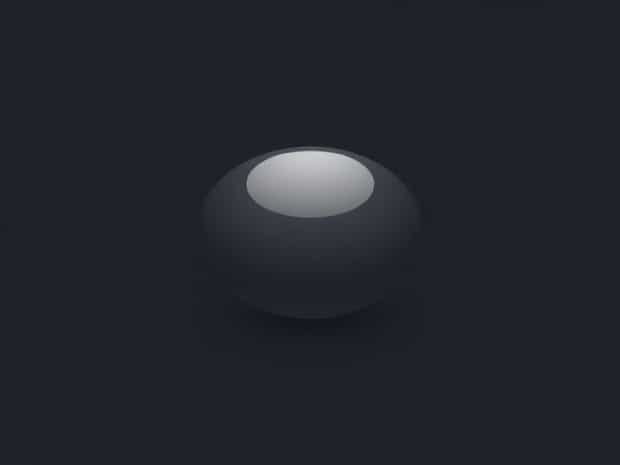
Is An Ovoid A Sphere
In geometry, shapes often carry subtle differences that are not immediately obvious. One such comparison that can spark curiosity is between an ovoid and a sphere. At first glance, both may look quite similar since they are rounded and lack sharp edges. However, when examined closely, an ovoid is not the same as a sphere. Understanding the distinction requires exploring their definitions, structures, and applications in both mathematics and the natural world. This topic takes a closer look at the differences and similarities between these two fascinating forms, answering the question is an ovoid a sphere?
Understanding the Sphere
A sphere is a perfectly symmetrical three-dimensional shape. Every point on its surface is equidistant from the center. This constant distance is called the radius, and it defines the entire geometry of the sphere. Because of this property, spheres are often used in mathematics, physics, and engineering as idealized models of planets, bubbles, and many other objects.
Key Features of a Sphere
- Perfectly symmetrical in all directions.
- Defined by a single measurement the radius.
- All surface points are the same distance from the center.
- Mathematically represented with the equationx² + y² + z² = r².
This precision makes the sphere an important shape in geometry and sciences. From a pure mathematical standpoint, it is the ultimate example of uniformity.
What is an Ovoid?
An ovoid, on the other hand, is not perfectly symmetrical in the same way as a sphere. The term generally refers to any egg-like shape that is rounded but slightly elongated. Unlike a sphere, which has equal axes, an ovoid has at least one axis that is longer than the others. This creates a shape that is often used to describe eggs, seeds, or even some architectural designs.
Key Features of an Ovoid
- Resembles the shape of an egg.
- One axis is usually longer, giving it an elongated look.
- Not perfectly symmetrical like a sphere.
- Occurs naturally in biology, such as in bird eggs or certain fruits.
Ovoids are widely appreciated not only for their geometric qualities but also for their practical occurrences in nature, where they serve important functional roles.
Comparing Ovoid and Sphere
To answer whether an ovoid is a sphere, the simple answer is no. While they share similarities, they are distinct. Both are three-dimensional and rounded, but the sphere’s perfection contrasts with the ovoid’s elongated asymmetry.
Similarities
- Both are three-dimensional shapes.
- Both have smooth, curved surfaces.
- Both occur in natural forms.
Differences
- A sphere is defined by one radius, while an ovoid is defined by varying axes.
- Spheres are mathematically precise, while ovoids are descriptive and less rigid in definition.
- Spheres are perfectly symmetrical, ovoids are not.
These differences underline why an ovoid cannot be classified as a sphere, though the two share certain visual similarities.
Applications in the Real World
Understanding the distinction between an ovoid and a sphere helps in multiple fields. In biology, eggs are often described as ovoid, and their shape serves evolutionary functions such as preventing rolling away. In engineering and architecture, ovoid shapes are sometimes used to create structures that distribute stress efficiently, while spheres are used for their uniformity and strength.
Examples of Ovoids in Nature
- Bird eggs, which are elongated for safety and strength.
- Seeds and fruits that carry protective ovoid shells.
- Certain bones and anatomical structures with ovoid ends.
Examples of Spheres in Nature
- Planets and stars, approximating spheres due to gravity.
- Bubbles that form in spherical shapes to minimize surface tension.
- Some cells, such as spherical bacteria.
The widespread occurrence of both shapes shows their importance in natural and scientific contexts.
Mathematical Considerations
From a mathematical perspective, the distinction is clearer. The sphere has a well-defined formula and properties that make it easy to calculate volume and surface area. An ovoid, however, does not have a single universal formula because it can vary in definition. Some ovoids can be described using ellipses rotated around an axis, making them close to ellipsoids.
Formulas Involved
- Volume of a sphere (4/3)Ïr³.
- Surface area of a sphere 4Ïr².
- Ovoids are approximated with ellipsoid formulas, depending on axis lengths.
This shows that while spheres are exact in definition, ovoids depend more on descriptive approximation.
Cultural and Symbolic Differences
Beyond science, both shapes carry cultural symbolism. The sphere is often seen as a symbol of unity, perfection, and eternity. Ovoids, by contrast, symbolize fertility, growth, and life because of their association with eggs and reproduction.
Symbolism in Society
- Spheres represent wholeness and balance.
- Ovoids represent beginnings, birth, and potential.
This distinction highlights how geometry influences not only science but also art, philosophy, and daily life.
Why the Distinction Matters
Recognizing the difference between an ovoid and a sphere is not just academic. It helps in precise communication, scientific modeling, and even artistic expression. When someone asks is an ovoid a sphere, the nuanced answer shows the importance of careful definition in geometry and beyond.
an ovoid is not a sphere. While both shapes are rounded and three-dimensional, their mathematical definitions, natural appearances, and symbolic meanings set them apart. The sphere represents perfect symmetry, while the ovoid embodies natural variation and practical functionality. Understanding these distinctions deepens our appreciation of geometry and its role in both science and culture, reminding us that shapes are more than just figures they are concepts that reflect the world around us.