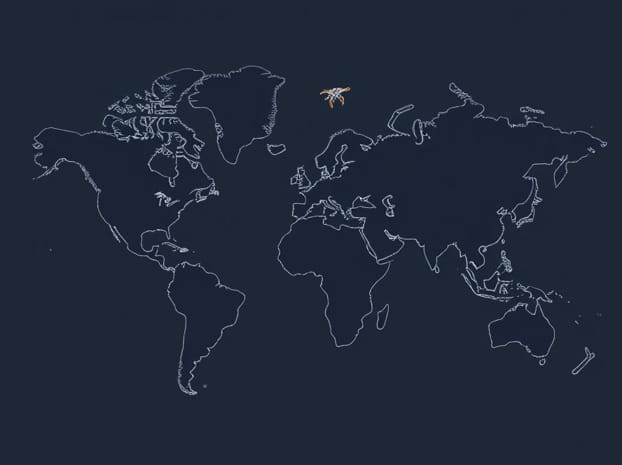
Global Undersea Cable Map
When people think of the internet, they often imagine satellites or wireless signals transmitting data around the globe. In reality, the backbone of the digital world lies beneath the ocean in the form of undersea cables. A global undersea cable map illustrates the vast network of fiber-optic cables crisscrossing the seabed, carrying almost all international data traffic. These cables make it possible for us to send emails, stream videos, and communicate in real time with people thousands of miles away. Understanding this network not only highlights the scale of modern connectivity but also shows how fragile and essential it is to our daily lives.
What Is a Global Undersea Cable Map?
A global undersea cable map is a detailed representation of the thousands of miles of submarine cables that link continents and countries. These maps help visualize how the digital infrastructure of the world is connected. They display major cable landing points, routes, and operators. While the network appears invisible in daily life, the map reveals a complex and intricate system essential for global communication and trade.
Importance of Undersea Cables
Despite the rise of satellites, about 95% of international data traffic still relies on undersea fiber-optic cables. These cables are capable of transmitting enormous amounts of data at high speed and low latency, making them indispensable for businesses, governments, and individuals. The global undersea cable map demonstrates how every continent, except Antarctica, depends on this infrastructure to stay digitally connected.
Key roles of undersea cables
- Supporting international financial transactions and stock market operations.
- Enabling streaming services, video conferencing, and cloud computing.
- Facilitating cross-border communication for education, healthcare, and diplomacy.
- Providing redundancy and reliability in case one connection fails.
Structure of Undersea Cable Networks
Each cable is composed of multiple layers designed to withstand extreme conditions. Inside, fiber-optic strands transmit data as pulses of light. Protective layers of steel and insulation shield the fibers from pressure, corrosion, and external damage. A global undersea cable map often shows the major hubs where cables converge, such as coastal landing stations that connect to terrestrial networks. These hubs are vital for distributing international data across entire regions.
Major Routes Highlighted on the Map
The global undersea cable map outlines several high-traffic routes that serve as digital highways
- Transatlantic routes Connecting North America and Europe, these are among the busiest data corridors in the world.
- Transpacific routes Linking Asia with North America, critical for trade, business, and technology exchanges.
- Intra-Asia routes Connecting key economies like Japan, Singapore, India, and China.
- Africa to Europe routes Essential for Africa’s growing digital economy and international connectivity.
- Middle East routes Acting as crossroads for cables between Europe, Asia, and Africa.
How Maps Are Created
A global undersea cable map is typically based on publicly available data provided by cable operators and regulatory bodies. While the precise coordinates of cables are often kept confidential for security reasons, the general routes and landing stations are shared. Maps can be interactive, allowing users to explore specific cables, or static for educational and reference purposes. The visual layout provides insight into both geographic distribution and geopolitical dependencies.
Security and Vulnerability of Cables
Although undersea cables are robust, they remain vulnerable to accidental damage and deliberate sabotage. Fishing nets, anchors, and natural disasters like earthquakes can disrupt service. The global undersea cable map highlights chokepoints where multiple cables converge, making them particularly sensitive areas. Nations and companies invest heavily in monitoring and protecting these routes to ensure uninterrupted connectivity.
Geopolitical importance
The map also emphasizes how cables intersect with global politics. Control over landing stations or specific routes can become a strategic advantage for countries. In recent years, debates over who builds and maintains new cables have become intertwined with issues of national security and technological competition.
Growth of New Cables
The demand for faster, more reliable internet has fueled the construction of new submarine cables. Technology giants like Google, Meta, and Microsoft now invest heavily in building their own networks, ensuring they have direct control over data transmission. A modern global undersea cable map shows a rapidly expanding system, with new projects linking underserved regions such as South America and Africa.
Impact on Global Connectivity
By examining a global undersea cable map, one can understand how digital divides are being addressed. Regions that once relied on a handful of cables now see multiple new connections, improving speed, capacity, and redundancy. This expansion contributes to economic growth, digital innovation, and global collaboration.
Future of Undersea Cable Maps
As technology advances, the role of undersea cables will only increase. The next generation of cables offers higher capacity and greater durability. Interactive global undersea cable maps will continue to evolve, integrating real-time data about outages, capacity, and upgrades. These tools will not only serve researchers and engineers but also provide the public with greater awareness of the hidden infrastructure powering their digital lives.
Tips for Understanding the Map
When exploring a global undersea cable map, keep the following in mind
- Look for major hubs where many cables converge; these are critical for global data flows.
- Identify emerging regions gaining new connections, as these often signal digital growth.
- Note the redundancy of routes; multiple connections between regions reduce risks of outages.
- Pay attention to historical growth patterns to see how the network has expanded over decades.
The global undersea cable map is more than just a visual of lines across oceans it is a window into the foundation of modern communication. Every message, transaction, and video stream depends on this hidden infrastructure. By studying the map, we gain a clearer understanding of how interconnected the world truly is. The cables may be invisible to most, but their impact shapes global economies, politics, and societies. As demand for connectivity continues to rise, the map will expand, reflecting humanity’s growing reliance on a network that lies beneath the waves yet keeps the world above connected.