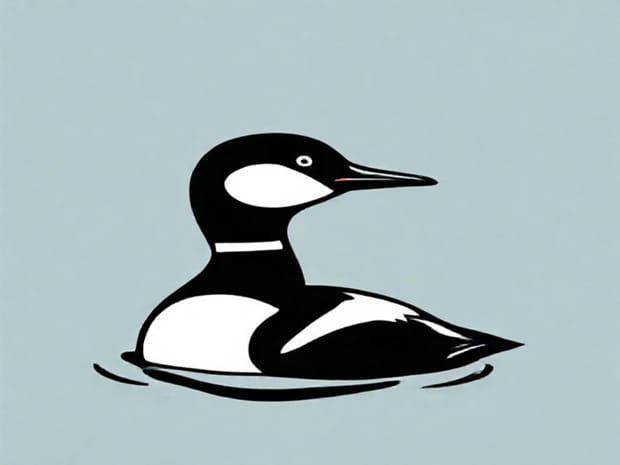
Bufflehead Vs Hooded Merganser
When observing waterfowl in North America, two species often draw attention for their striking appearances and distinctive behaviors the Bufflehead and the Hooded Merganser. Both are small diving ducks found in freshwater lakes, rivers, and coastal regions, yet they differ in habitat preferences, physical characteristics, feeding habits, and breeding behaviors. Birdwatchers and wildlife enthusiasts frequently compare these two species due to their overlapping ranges and similarities in size, making it essential to understand their differences and unique traits. By examining the Bufflehead and Hooded Merganser in detail, one can gain a deeper appreciation for the diversity and adaptability of North American waterfowl.
Physical Characteristics
The Bufflehead (Bucephala albeola) and the Hooded Merganser (Lophodytes cucullatus) are both compact ducks, but they exhibit distinct physical features that help in identification. Males of both species display striking plumage, while females are generally more subdued, blending into their surroundings for camouflage.
Bufflehead Appearance
Male Buffleheads are small, measuring about 13-16 inches in length with a wingspan of 21-24 inches. Their most notable feature is the large, iridescent white patch on the back of their heads, contrasting sharply with glossy green and purple plumage on the rest of the head. Their bodies are predominantly white with black backs and wings. Female Buffleheads are gray-brown with a small white patch on the cheek, which makes them less conspicuous in the wild.
Hooded Merganser Appearance
Hooded Mergansers are slightly larger than Buffleheads, measuring 16-19 inches in length with a wingspan of 24-27 inches. Male Hooded Mergansers have a dramatic crest that can be raised or lowered, creating a bold white and black pattern on the head. Their bodies are chestnut brown with a white chest and black back. Females are brown with a crest of their own, though less pronounced, helping them remain inconspicuous while nesting or feeding.
Habitat and Distribution
Both species inhabit North America, but their preferred environments and migration patterns vary. Understanding these differences can aid birdwatchers and researchers in identifying them in the field.
Bufflehead Habitat
Buffleheads are commonly found in shallow freshwater lakes, ponds, and slow-moving rivers, often near wooded areas. During winter, they migrate to coastal bays, estuaries, and protected marine waters along the Pacific and Atlantic coasts. They are cavity nesters, frequently using abandoned woodpecker holes in trees, which restricts their breeding habitat to areas with mature forests and accessible water bodies.
Hooded Merganser Habitat
Hooded Mergansers prefer freshwater habitats such as small lakes, ponds, marshes, and streams. They are closely associated with wooded wetlands where trees provide nesting cavities. During winter, they migrate to larger bodies of water, including rivers, reservoirs, and coastal inlets. Their need for tree cavities for nesting makes mature forested wetlands crucial for their reproductive success.
Feeding Behavior
While both the Bufflehead and Hooded Merganser are diving ducks, their feeding habits exhibit notable differences. Each species has evolved adaptations suited to their diets and preferred prey.
Bufflehead Diet
Buffleheads primarily feed on aquatic invertebrates such as insects, crustaceans, and mollusks. They are agile divers, often plunging underwater to catch prey from the substrate or among aquatic vegetation. During the breeding season, they may also consume small fish and plant matter to supplement their diet. Their foraging behavior is swift and energetic, with frequent short dives rather than prolonged underwater pursuits.
Hooded Merganser Diet
Hooded Mergansers have specialized serrated bills that help them capture fish, amphibians, and aquatic insects. They are adept at pursuing prey underwater, often using stealth and quick lunges to snatch small fish or tadpoles. They also consume crustaceans and other invertebrates, particularly in winter when fish may be less abundant. Their diet and foraging methods make them highly effective hunters in forested ponds and streams.
Breeding and Nesting
Reproduction strategies for Buffleheads and Hooded Mergansers are shaped by their reliance on tree cavities for nesting. These nesting habits influence territorial behavior, parental care, and overall reproductive success.
Bufflehead Nesting
Buffleheads typically select abandoned woodpecker holes or natural cavities in trees near water for nesting. The female lines the cavity with down feathers to insulate the eggs. Clutch sizes generally range from 7 to 12 eggs, and the female solely incubates them for about 30 days. After hatching, the ducklings leap from the cavity to the water within a day and are led by the mother to foraging areas, where they quickly learn to dive and feed.
Hooded Merganser Nesting
Hooded Mergansers also utilize tree cavities or nest boxes close to water. The female lays 7 to 15 eggs, incubating them for approximately 30 days. Ducklings leave the nest within a day of hatching and follow the mother to find food. Hooded Mergansers are known for being highly protective of their young, often choosing concealed nesting sites to reduce predation risk. Their nesting behavior emphasizes both concealment and proximity to aquatic feeding grounds.
Behavioral Differences
Observing behavior can help distinguish Buffleheads from Hooded Mergansers in the field. Each species exhibits characteristic patterns in movement, social interaction, and vocalization.
Bufflehead Behavior
Buffleheads are highly social, often forming large flocks during migration or wintering. They are energetic divers, frequently popping up and down in quick succession while feeding. Their flight is fast and direct, with rapid wingbeats. Males display territorial behavior during the breeding season, performing courtship displays that include head-bobbing, neck-stretching, and wing-flicking to attract females.
Hooded Merganser Behavior
Hooded Mergansers tend to be more secretive, especially females with ducklings. They are known for slow, deliberate dives and stealthy movements while hunting. Males perform distinctive displays during courtship, raising their crests and performing lateral head shakes to impress females. Hooded Mergansers are less likely to form large wintering flocks than Buffleheads, often remaining in smaller groups or pairs.
Conservation Status
Both species benefit from conservation measures that protect wetlands and forested habitats. Currently, both the Bufflehead and Hooded Merganser are classified as species of least concern, but habitat loss and environmental changes pose potential risks. Maintaining clean water bodies, preserving mature forests for nesting, and monitoring populations are essential for sustaining healthy populations of these diving ducks.
Threats
- Loss of forested wetlands and nesting cavities due to logging and development.
- Water pollution impacting food availability and habitat quality.
- Climate change affecting migration patterns and prey abundance.
- Human disturbance near nesting sites during breeding season.
While Buffleheads and Hooded Mergansers share similarities as small diving ducks, they exhibit distinct differences in appearance, habitat preference, feeding behavior, and social habits. Buffleheads are recognized for their striking white head patches and energetic flocking behavior, while Hooded Mergansers are noted for their dramatic crests and specialized hunting techniques. Understanding these differences enhances appreciation for the diversity of North American waterfowl and highlights the importance of conserving their habitats. Observing both species provides insights into the adaptability of wildlife and the intricate balance of ecosystems in which these captivating birds thrive.