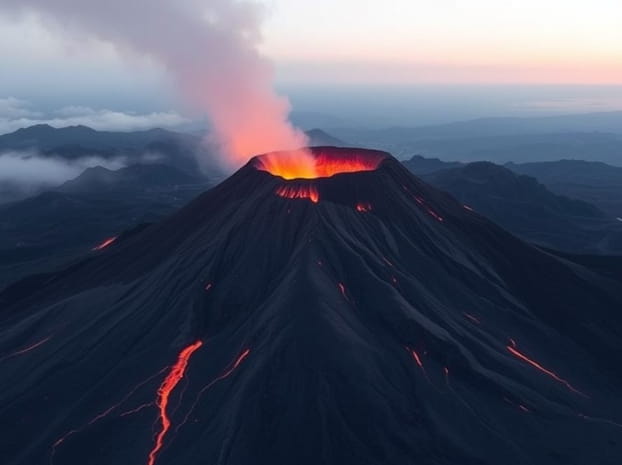
How Do Volcanoes Form At Convergent Boundaries
Volcanoes are some of the most dramatic and powerful features on Earth’s surface, shaping landscapes and influencing ecosystems and human settlements. One of the primary mechanisms by which volcanoes form is at convergent plate boundaries, where tectonic plates collide. Understanding how volcanoes develop in these zones requires knowledge of plate tectonics, subduction processes, and magma generation. These processes not only explain the formation of volcanic arcs and mountain ranges but also highlight the dynamic nature of Earth’s interior. Volcanoes at convergent boundaries are often explosive and create some of the most iconic peaks found around the world.
What Are Convergent Boundaries?
Convergent boundaries occur when two tectonic plates move toward each other and collide. Depending on the types of plates involved oceanic or continental different geological features can form. There are three main types of convergent boundaries oceanic-continental, oceanic-oceanic, and continental-continental. Volcano formation is most common at oceanic-continental and oceanic-oceanic convergences due to the subduction of one plate beneath another. The collision generates immense pressure, friction, and melting of the subducted plate, which contributes to magma formation.
Types of Convergent Boundaries
- Oceanic-Continental ConvergenceAn oceanic plate is forced beneath a continental plate, creating volcanic mountain ranges along the continental margin.
- Oceanic-Oceanic ConvergenceOne oceanic plate subducts beneath another, forming island arcs composed of multiple volcanoes.
- Continental-Continental ConvergenceAlthough primarily associated with mountain building, this type can occasionally produce volcanism if there is sufficient partial melting in the crust.
The Role of Subduction in Volcano Formation
Subduction is the process in which one tectonic plate is forced under another into the mantle. When an oceanic plate descends beneath a continental or oceanic plate, it carries with it water and minerals locked within sediments and crustal rocks. As the subducted plate sinks, increasing temperature and pressure cause these materials to release water into the overlying mantle wedge. This addition of water lowers the melting point of mantle rock, generating magma that is less dense than surrounding rock. This buoyant magma then rises toward the surface, eventually forming volcanoes.
Magma Generation and Composition
The magma produced at convergent boundaries is typically rich in silica due to the melting of both the subducted oceanic crust and the overlying mantle. This high silica content makes the magma more viscous, which contributes to the explosive nature of many convergent boundary volcanoes. In addition, the subduction process can incorporate sediments and continental crust material, further influencing the chemical composition of the magma. This leads to a range of volcanic rock types, including andesite, dacite, and rhyolite, commonly found in volcanic arcs and island chains.
Volcanic Arcs and Island Chains
Volcanoes at convergent boundaries often form in linear chains parallel to the trench where subduction occurs. On continental margins, this results in continental volcanic arcs, such as the Andes in South America. In oceanic settings, island arcs form, such as the Aleutian Islands in Alaska or the Japanese archipelago. The distance between the volcanic arc and the subduction trench is determined by the angle and depth of the subducting slab. These arcs provide evidence of active tectonics and magma generation beneath the surface.
Factors Influencing Volcano Location and Activity
- Angle of subduction Steeper subduction angles often produce volcanoes closer to the trench.
- Rate of plate convergence Faster subduction can enhance magma production.
- Composition of subducted material Sediments and oceanic crust influence magma chemistry.
- Depth of melting The depth at which the mantle melts affects the type and volume of magma.
Explosive Nature of Convergent Boundary Volcanoes
Volcanoes at convergent boundaries are known for their explosive eruptions. The high viscosity of silica-rich magma traps gases, building pressure within the magma chamber. When the pressure exceeds the strength of the overlying rock, a violent eruption occurs, ejecting lava, ash, and pyroclastic material. This explosiveness contrasts with the more fluid basaltic lava commonly associated with divergent boundaries, such as mid-ocean ridges. The hazards associated with these volcanoes include pyroclastic flows, lahars, ashfall, and volcanic gas emissions, which can impact nearby communities and ecosystems.
Famous Examples
- Mount St. Helens, USA An example of a continental volcanic arc formed by the subduction of the Juan de Fuca Plate beneath the North American Plate.
- Mount Fuji, Japan Part of an island arc produced by the subduction of the Pacific Plate beneath the Eurasian Plate.
- Mount Pinatubo, Philippines Located in a convergent boundary zone, it produced one of the largest eruptions in the 20th century.
- Andean Volcanoes Such as Cotopaxi and Chimborazo, formed along the western edge of South America due to subduction of the Nazca Plate.
Long-Term Geological Implications
Volcanoes at convergent boundaries play a significant role in shaping Earth’s topography over millions of years. Continuous volcanic activity builds mountain ranges, island chains, and fertile valleys, influencing climate, hydrology, and ecosystems. The eruption products lava flows, ash, and volcanic rocks also contribute to soil fertility, which supports agriculture in regions like the Andes and Japanese archipelago. Studying these volcanoes provides insights into plate tectonics, magma dynamics, and geological hazards, enhancing our ability to predict and mitigate volcanic risks.
Monitoring and Hazard Management
Given their explosive potential, volcanoes at convergent boundaries are closely monitored using seismographs, GPS, satellite imagery, and gas emission sensors. Early warning systems and hazard maps help protect nearby populations from eruptions and associated hazards. Emergency preparedness, public education, and evacuation planning are crucial components of managing the risks posed by these active volcanoes.
Volcanoes at convergent boundaries form as a result of the subduction of one tectonic plate beneath another, generating magma through the melting of the mantle and subducted crust. This process produces silica-rich, viscous magma that often leads to explosive eruptions. Convergent boundary volcanoes create striking geological features such as volcanic arcs and island chains, including some of the most iconic volcanoes in the world like Mount St. Helens, Mount Fuji, and Cotopaxi. Their formation, chemical composition, and explosive behavior are direct consequences of plate tectonics and subduction dynamics.
Understanding how volcanoes form at convergent boundaries is essential for geology, hazard management, and appreciating the dynamic nature of Earth. These volcanoes influence landscapes, ecosystems, and human settlements while providing valuable insights into the planet’s internal processes. By studying convergent boundary volcanoes, scientists can better predict eruptions, mitigate risks, and understand the continuous interplay between tectonic forces and volcanic activity that shapes our planet’s surface over geological time.