How Did The Astrolabe Help European Explorers
The age of European exploration was marked by bold voyages across uncharted seas, driven by the desire for trade, wealth, and territorial expansion. Navigating vast oceans with limited maps and unpredictable weather posed significant challenges to explorers. Among the essential tools that aided these adventurers was the astrolabe, a sophisticated instrument used to measure the position of celestial bodies. By providing a reliable method for determining latitude, the astrolabe enabled European explorers to navigate with greater precision, avoid dangerous areas, and chart new territories. Its impact on exploration was profound, influencing trade routes, colonization, and the spread of knowledge about the world.
Origins and Development of the Astrolabe
The astrolabe originated in ancient Greece and was later refined by Islamic scholars during the medieval period. Early versions were primarily used for astronomical and timekeeping purposes, allowing observers to measure the altitude of stars and planets. Islamic scholars enhanced the design by adding more precise scales and markings, making the instrument increasingly accurate for practical navigation. By the 15th century, knowledge of the astrolabe reached Europe, where it became a crucial instrument for maritime explorers seeking to venture beyond familiar coastlines.
Design and Functionality
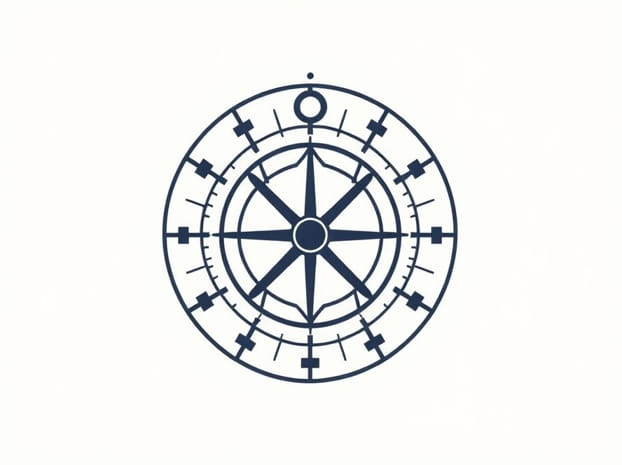
The astrolabe is composed of a flat disk called the mater, a rotating star map known as the rete, and an alidade for sighting celestial objects. Navigators would align the alidade with a star, usually Polaris in the Northern Hemisphere, to measure its altitude above the horizon. This measurement could then be used to calculate latitude, the distance north or south of the equator. Unlike other instruments of the time, the astrolabe was relatively portable, durable, and versatile, which made it ideal for use on ships navigating unpredictable seas.
- Mater the base disk with engraved scales
- Rete a rotating map of stars and constellations
- Alidade a sighting rule for measuring angles
- Portable and suitable for maritime navigation
Role in Determining Latitude
One of the most significant contributions of the astrolabe was its ability to help sailors determine latitude. Before its use, sailors relied on coastal landmarks or dead reckoning, both of which were unreliable in open waters. By measuring the altitude of the sun at noon or the height of stars at night, navigators could calculate their latitude with remarkable accuracy. This allowed European explorers to maintain course over long distances, reducing the risk of getting lost and enabling them to venture further into unknown regions of the Atlantic, Indian, and Pacific Oceans.
Latitude and Navigation
Latitude is the distance north or south of the equator, measured in degrees. Accurate knowledge of latitude was essential for plotting courses on maps and for coordinating long sea voyages. Using the astrolabe, explorers could determine their position relative to the equator, plan their routes with confidence, and avoid dangerous waters. For example, Portuguese and Spanish navigators used astrolabes extensively during the 15th and 16th centuries to explore the west coast of Africa and eventually reach India and the Americas.
- Measured altitude of the sun or stars to determine latitude
- Enabled longer voyages with greater confidence in position
- Reduced dependence on coastal landmarks
- Improved accuracy of early nautical maps
Impact on European Exploration
The astrolabe significantly influenced European exploration by expanding the range and safety of sea travel. Portuguese explorers like Bartolomeu Dias and Vasco da Gama relied on astrolabe measurements to round the Cape of Good Hope and navigate to India. Similarly, Spanish explorers such as Christopher Columbus used celestial navigation techniques, including the astrolabe, to cross the Atlantic and discover the Americas. The ability to measure latitude allowed explorers to chart courses across open seas, establish trade routes, and maintain communication with home ports. This technological advantage contributed to the dominance of European powers in global exploration and trade during the 15th and 16th centuries.
Trade and Colonization
By providing reliable navigation, the astrolabe facilitated the establishment of trade routes connecting Europe with Africa, Asia, and the Americas. Portuguese traders could reach India and Southeast Asia more efficiently, while Spanish colonizers could travel to the Caribbean and South America. The instrument’s precision allowed for predictable travel times, which improved trade logistics and helped European nations assert control over distant colonies. In this way, the astrolabe not only influenced exploration but also played a crucial role in the economic and political expansion of Europe.
- Enabled long-distance trade and contact with new regions
- Supported European colonial expansion
- Enhanced maritime safety and reduced shipwrecks
- Provided a technological edge over non-European navigators
Scientific and Cultural Contributions
The use of the astrolabe also had broader scientific and cultural implications. By measuring celestial bodies, European explorers contributed to the growth of astronomical knowledge. Observations made during voyages helped refine maps, improve the accuracy of star charts, and advance the study of geography and astronomy. The astrolabe became a symbol of the interplay between science and exploration, demonstrating how technological innovation could drive global discovery. Its use inspired further inventions in navigation, such as the quadrant and the sextant, which built upon the principles established by the astrolabe.
Legacy in Navigation and Exploration
The astrolabe’s legacy extends beyond its immediate use in the Age of Exploration. It laid the foundation for modern navigational instruments and techniques. By demonstrating the practical application of astronomical knowledge to maritime travel, it bridged the gap between science and exploration. Navigators learned to integrate observation, calculation, and charting, establishing the methods that would eventually lead to global circumnavigation and the creation of more accurate world maps.
- Enhanced astronomical knowledge and mapmaking
- Influenced the development of later navigational instruments
- Promoted scientific approaches to exploration
- Contributed to the European understanding of global geography
The astrolabe was a transformative tool for European explorers, providing a reliable means of determining latitude and navigating open seas with unprecedented accuracy. Its design allowed for precise measurements of celestial bodies, which enabled longer voyages, improved trade routes, and facilitated the colonization of distant lands. Beyond its practical applications, the astrolabe contributed to scientific knowledge, inspiring advances in astronomy, cartography, and navigation technology. By bridging the gap between observation and exploration, the astrolabe helped European explorers expand their horizons, reshape the world map, and lay the foundation for global maritime trade and cultural exchange. Its influence is a testament to the power of technological innovation in shaping human history.