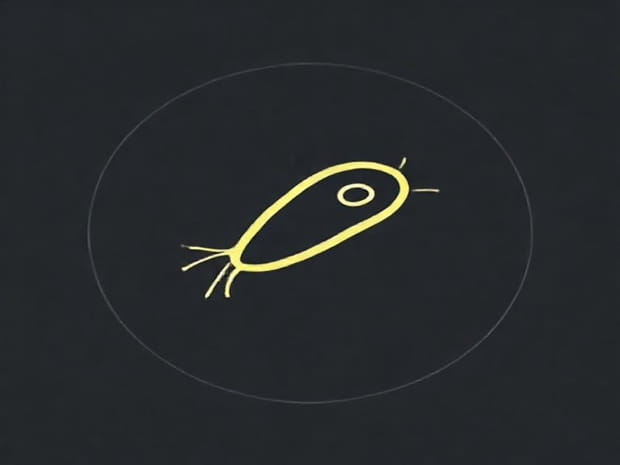
Does Yeast Have Flagella?
Yeasts are fascinating microorganisms that play crucial roles in baking, brewing, and biotechnology. As single-celled fungi, they have diverse structures and life cycles, and their cellular features have been studied extensively to understand growth, reproduction, and motility. One common question about yeast biology is whether these organisms possess flagella, the whip-like structures used by many microorganisms for movement. Understanding yeast motility, or lack thereof, provides insights into their biology, reproduction strategies, and adaptation to various environments. It also clarifies misconceptions about how these widely used fungi behave compared to other single-celled organisms such as bacteria or protozoa.
Overview of Yeast Biology
Yeasts belong to the kingdom Fungi and are eukaryotic microorganisms, meaning they have a defined nucleus and membrane-bound organelles. They are found in a variety of environments, including soil, water, plant surfaces, and fermented foods. Yeasts are primarily known for their role in fermentation, converting sugars into alcohol and carbon dioxide, which is essential in brewing, winemaking, and bread-making. Their cellular structure and reproductive strategies make them unique among microorganisms, particularly when comparing them to motile bacteria or protozoa that rely on flagella for movement.
Common Yeast Species
-
Saccharomyces cerevisiaeWidely used in baking and brewing, this species reproduces mainly by budding and lacks motility structures.
-
Candida albicansAn opportunistic pathogen in humans, capable of forming biofilms but does not have flagella for movement.
-
Schizosaccharomyces pombeA fission yeast used in molecular and cell biology research; it also reproduces without flagella.
Flagella in Microorganisms
Flagella are whip-like appendages that protrude from the cell body of many microorganisms and facilitate locomotion. They are commonly found in bacteria, protozoa, and certain algae. Flagella enable these organisms to swim toward nutrients or away from harmful substances through a process known as chemotaxis. In eukaryotic cells, flagella are more complex, containing microtubules arranged in a characteristic 9+2 pattern, and are powered by motor proteins that generate movement. The presence or absence of flagella is an important feature in classifying microorganisms and understanding their ecological roles.
Functions of Flagella
-
Locomotion Moving toward favorable environments and away from harmful stimuli.
-
Feeding Assisting in capturing nutrients in some protists.
-
Reproduction In some microorganisms, flagella are involved in gamete mobility.
-
Sensing Detecting environmental signals through mechanosensory and chemical cues.
Yeast and Flagella
Despite being single-celled eukaryotes, most yeasts do not possess flagella at any stage of their life cycle. Unlike motile protozoa or flagellated algae, yeasts rely primarily on budding or fission for reproduction rather than movement. Saccharomyces cerevisiae, one of the most extensively studied yeasts, reproduces by forming a bud on the mother cell, which eventually detaches to become a new cell. Schizosaccharomyces pombe divides by fission, splitting into two daughter cells. Neither of these processes requires flagella for locomotion or mating, highlighting a fundamental difference between yeast and motile microorganisms.
Exceptions and Special Cases
While most yeasts lack flagella, some primitive fungi related to yeasts, such as chytrids, do produce flagellated spores called zoospores. These flagellated cells are typically aquatic and require motility to reach suitable substrates for growth. However, these organisms are not true yeasts in the traditional sense and belong to a different fungal lineage. This distinction helps clarify why typical yeasts used in baking, brewing, and research are non-motile and do not possess flagella.
Yeast Motility Without Flagella
Although yeasts do not have flagella, they can exhibit limited movement through alternative mechanisms. For instance, yeast cells can float in liquid media due to Brownian motion or passive movement caused by fluid currents. Additionally, certain yeasts can form biofilms on surfaces, spreading collectively by growth rather than individual locomotion. These strategies allow yeasts to colonize substrates and environments effectively without the need for specialized motility structures.
Reproductive Strategies
Yeasts reproduce asexually through budding or fission, which ensures rapid population expansion. Some species also engage in sexual reproduction, forming spores under stress conditions. Sexual reproduction in yeast does not involve flagellar motility; instead, it relies on pheromone signaling and cellular fusion to exchange genetic material. This mechanism demonstrates that yeasts have evolved efficient reproductive strategies without requiring flagella.
Ecological and Practical Implications
The absence of flagella in yeasts has ecological and practical significance. In natural environments, yeast dispersal often depends on external factors such as wind, water currents, or animal vectors rather than active swimming. This passive dispersal strategy is sufficient for yeast survival, colonization, and fermentation processes. For industrial and laboratory applications, understanding that yeasts are non-motile helps optimize fermentation conditions, ensuring proper mixing, aeration, and nutrient distribution for maximum growth and product yield.
Industrial Considerations
-
Baking and BrewingYeasts rely on diffusion of nutrients and agitation in dough or fermentation tanks rather than movement toward substrates.
-
BiotechnologyIn laboratory cultures, mixing and shaking cultures ensures even distribution of nutrients and oxygen for yeast growth.
-
Research StudiesKnowledge of yeast non-motility informs experimental design, particularly in studies involving cellular signaling and biofilm formation.
yeasts do not have flagella and do not use motility structures for movement at any stage of their life cycle. Their survival, reproduction, and colonization rely on passive dispersal, budding, fission, and biofilm formation rather than active locomotion. While some primitive fungal relatives produce flagellated spores, true yeasts such as Saccharomyces cerevisiae and Schizosaccharomyces pombe are non-motile. Understanding this aspect of yeast biology is important for ecological studies, industrial fermentation, and laboratory research. The absence of flagella distinguishes yeasts from other single-celled microorganisms like bacteria and protozoa, emphasizing their unique adaptations and strategies for growth and reproduction. Recognizing that yeast are non-motile helps clarify misconceptions and informs practical applications where yeast performance depends on controlled environmental conditions rather than inherent motility.