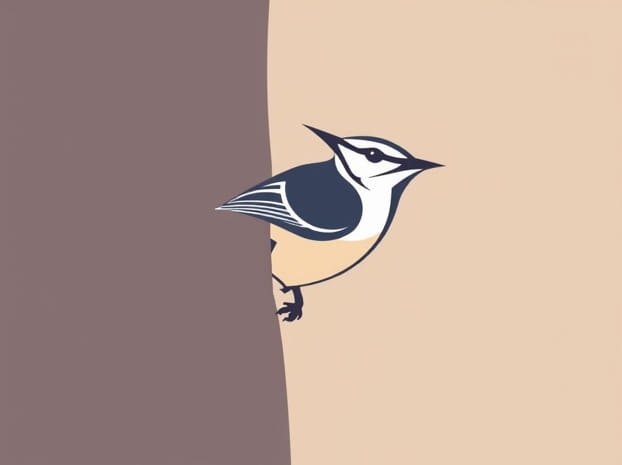
How Big Is A Nuthatch
Nuthatches are small, agile birds that are often admired for their acrobatic abilities and distinctive calls. They are commonly found in wooded areas across North America, Europe, and parts of Asia. Many bird enthusiasts and casual observers alike are curious about their size, as these birds are tiny yet remarkably sturdy. Understanding the physical dimensions of nuthatches helps in identifying them in the wild and appreciating their unique adaptations for climbing trees, foraging for insects, and storing food for the winter months.
Physical Characteristics of Nuthatches
Nuthatches are compact birds with a distinctive appearance that makes them easy to recognize once you are familiar with them. Their bodies are streamlined and slightly flattened, allowing them to move effortlessly along tree trunks and branches. One of their most notable features is their strong, pointed bill, which is perfectly adapted for extracting insects from crevices and cracking seeds. Their legs are short but powerful, and their toes are equipped with sharp claws that provide excellent grip on bark.
Average Size of a Nuthatch
The size of a nuthatch can vary slightly depending on the species, but most fall within a similar range. Generally, nuthatches measure between 10 and 14 centimeters (4 to 5.5 inches) in length from the tip of the beak to the end of the tail. Their wingspan typically ranges from 18 to 25 centimeters (7 to 10 inches), giving them the ability to maneuver quickly through dense foliage. Despite their small size, nuthatches are surprisingly robust and can carry out impressive feats of balance and agility.
Weight of Nuthatches
In addition to their length, the weight of nuthatches is another aspect of their size that is of interest to bird watchers. Most nuthatches weigh between 10 and 20 grams (0.35 to 0.7 ounces), which is quite light compared to many other forest-dwelling birds. Their low weight contributes to their ability to cling to vertical surfaces and even move upside-down along branches and tree trunks while foraging. This combination of lightness and strong musculature makes them exceptionally efficient at navigating their habitats.
Different Species and Size Variations
There are multiple species of nuthatches, each with subtle differences in size and coloration. Understanding these variations can help in more accurate identification
- White-breasted NuthatchOne of the largest species in North America, measuring about 14 centimeters in length with a wingspan of up to 25 centimeters. They have a distinctive white face and underparts with a blue-gray back.
- Red-breasted NuthatchSlightly smaller, around 11 to 12 centimeters long, with a wingspan of 18 to 22 centimeters. They are easily recognized by their reddish underparts and black-and-white striped head.
- Pygmy NuthatchThe smallest species in North America, averaging 9 to 10 centimeters in length with a wingspan of approximately 18 centimeters. Their diminutive size allows them to move quickly among pine needles and small branches.
- European NuthatchComparable in size to the white-breasted nuthatch, typically around 14 centimeters long with a wingspan of 22 to 25 centimeters. They have a blue-gray upper body and a buff-colored underbody, and they are often seen climbing down tree trunks headfirst.
Behavioral Adaptations Related to Size
The small size of nuthatches is directly linked to their survival strategies. Being lightweight allows them to access parts of trees that larger birds cannot reach. Their body shape and strong feet make it possible to cling to vertical surfaces, move upside-down, and even hang from branches while searching for food. This mobility provides access to insects hidden under bark and in crevices, which is a major part of their diet. Additionally, their size allows them to store seeds in tiny nooks for future consumption, demonstrating their clever foraging behavior.
Flight and Agility
Although nuthatches are capable fliers, they are not long-distance migrators for the most part. Their wings are short and rounded, enabling quick, agile flights between trees rather than sustained flight. This wing structure complements their small size and low weight, allowing them to maneuver in tight spaces and evade predators effectively. Nuthatches often fly in short bursts, hopping from branch to branch, which showcases their remarkable balance and precision.
Comparison with Similar Birds
For those trying to identify nuthatches in the wild, size is an important distinguishing feature. They are generally smaller than woodpeckers, chickadees, and titmice but share similar habitats. The compact size and strong, pointed bill of nuthatches help differentiate them from other small birds. Observing their unique climbing behavior, especially moving headfirst down tree trunks, can further confirm their identification.
Tips for Birdwatchers
- Use binoculars to observe the nuthatch’s small body and distinctive climbing posture.
- Listen for their sharp, nasal calls, which often accompany their quick movements.
- Compare size with nearby birds like chickadees or finches to gauge relative length and wingspan.
- Note the coloration and markings, which vary slightly between species but complement size for accurate identification.
Understanding the size of a nuthatch is key to appreciating its ecological role and unique behaviors. Measuring between 10 and 14 centimeters in length and weighing as little as 10 to 20 grams, these small birds demonstrate remarkable agility and adaptability. Their size allows them to exploit ecological niches that larger birds cannot, from clinging to vertical surfaces to storing food in tight spaces. Whether it is the white-breasted nuthatch, red-breasted nuthatch, pygmy nuthatch, or European nuthatch, their compact size is integral to their survival, feeding habits, and overall contribution to forest ecosystems. Observing and understanding these measurements enhances both birdwatching experiences and knowledge of avian biodiversity, highlighting how even the smallest birds play vital roles in their environments.