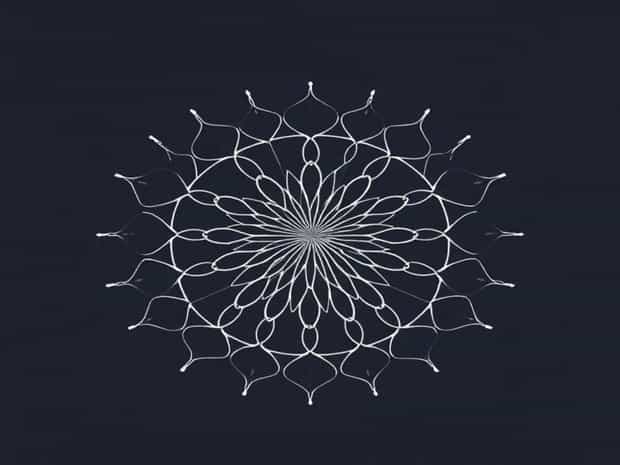
How To Read A Spirograph
Learning how to read a spirograph may seem like a simple artistic activity at first, but it can reveal deeper insights into geometry, patterns, and mathematical relationships. A spirograph consists of a set of gears and rings used to create intricate, looping designs that can vary widely depending on how the gears are combined. Understanding how to read a spirograph involves observing its structure, identifying repeating patterns, and recognizing the underlying mathematical principles that create these fascinating curves. By developing the ability to read and interpret spirograph designs, you can appreciate both the artistic and scientific aspects of these captivating geometric figures.
Understanding the Components of a Spirograph
Before you can read a spirograph design, it is important to understand the tools involved. A spirograph typically includes a variety of plastic gears and rings, a set of pens or pencils, and a piece of paper. The basic mechanism involves placing a small gear inside or outside a larger ring and guiding a pen through the holes in the gear as it rolls. The combination of the gear’s movement and the pen’s position produces continuous curves called hypotrochoids or epitrochoids, depending on whether the gear moves inside or outside the ring.
Types of Spirograph Patterns
Spirograph designs can be categorized into two main types
- HypotrochoidsThese curves are created when a smaller gear rolls inside a larger stationary ring. They often produce intricate, looping patterns that appear to spiral inward or form nested loops.
- EpitrochoidsThese curves occur when a smaller gear rolls around the outside of a larger ring. The resulting pattern often has more elongated loops and can resemble complex flower-like shapes.
Understanding whether a pattern is a hypotrochoid or an epitrochoid helps in interpreting the design and predicting how changes in gear placement will affect the curves.
Identifying Patterns and Symmetry
Reading a spirograph begins with observing the design’s symmetry and repeating elements. Most spirograph patterns have rotational symmetry, meaning they repeat around a central point. Counting the number of loops, points, or petals can provide clues about the ratio of the gears used. For example, a design with six evenly spaced loops may indicate that the smaller gear has a circumference one-sixth that of the larger ring. Recognizing these symmetrical features is key to understanding the mathematical relationships that govern spirograph designs.
Analyzing Looping Curves
Each curve in a spirograph pattern can be analyzed by following the path of the line and noting how it overlaps or intersects with itself. Observing where loops start and end, and where curves cross, helps in visualizing the gear’s rotation and the pen’s movement. By carefully tracing a single loop, you can determine whether the gear is moving inside or outside the ring and how many rotations it completes to create the full pattern. This analysis is useful for predicting what changes to gear size or placement will do to the design.
Understanding Gear Ratios
One of the most important aspects of reading a spirograph is understanding gear ratios. The size relationship between the rolling gear and the stationary ring determines the frequency of loops in the final design. A smaller gear relative to the ring produces more loops, while a larger gear produces fewer, broader loops. By calculating or estimating the gear ratio, you can anticipate the complexity and shape of the spirograph pattern. Gear ratios also explain why some patterns close perfectly while others appear to spiral indefinitely.
Predicting Pattern Outcomes
Once you understand the relationship between gear size, pen placement, and gear ratio, you can begin predicting the outcome of different combinations. Adjusting the pen hole closer to the center of the rolling gear creates tighter, more compact loops, while placing it near the edge produces broader, more open curves. Similarly, switching gears or using multiple rings can dramatically change the design. Being able to predict these outcomes allows you not only to read spirograph patterns but also to intentionally create desired designs with precision.
Tracing and Measuring Designs
Reading a spirograph can also involve physically tracing the design and measuring distances between loops and intersections. Using a ruler or compass can help quantify the size of loops, angles between curves, and the overall dimensions of the pattern. These measurements provide a more technical understanding of the design and reveal the mathematical structure hidden within the artistic curves. This analytical approach is particularly useful for educational purposes or for incorporating spirograph designs into technical illustrations.
Interpreting Color and Line Variations
Many spirograph creations use multiple colors or varying line thicknesses, which can help in reading the design. Different colors can represent different layers, rotations, or gear positions, making it easier to identify which part of the pattern corresponds to which gear movement. By analyzing how colors intersect or repeat, you can gain insights into the sequence of movements and the timing of loops. Line variations also provide visual clues about pen placement and gear rotation, further enhancing your ability to interpret the design.
Applications of Reading Spirograph Patterns
Learning to read spirograph designs has both artistic and educational benefits. In education, spirographs are used to teach concepts of geometry, symmetry, ratios, and periodic functions. Understanding these patterns can also enhance problem-solving skills and spatial reasoning. In art and design, the ability to read and analyze spirograph patterns allows artists to replicate complex designs, create new patterns with precision, or incorporate mathematical beauty into their artwork. Additionally, spirograph principles have inspired designs in engineering, computer graphics, and architecture, showing the relevance of reading these patterns beyond simple entertainment.
Tips for Beginners
For those new to spirographs, the following tips can help in learning how to read designs effectively
- Start with simple gear combinations to understand basic loop structures.
- Observe symmetry and count loops to determine gear ratios.
- Use different colored pens for overlapping curves to distinguish layers.
- Trace individual loops to follow the path of the gear and pen movement.
- Experiment with pen placement in different holes to see how it affects curve shapes.
By following these tips, beginners can gradually develop a more sophisticated understanding of spirograph patterns and learn to read even complex designs with confidence.
Reading a spirograph involves more than just looking at a pretty pattern. It requires understanding the underlying components, recognizing symmetry, analyzing loops, and interpreting gear ratios. By paying attention to the details of the curves, pen placement, and gear movements, anyone can decode the structure of a spirograph design. This skill enhances both artistic creativity and mathematical insight, bridging the gap between visual art and geometric understanding. With practice, reading spirographs can become an enjoyable and educational activity that provides a deeper appreciation of the harmony between mathematics and art, turning simple gear movements into intricate and mesmerizing designs.