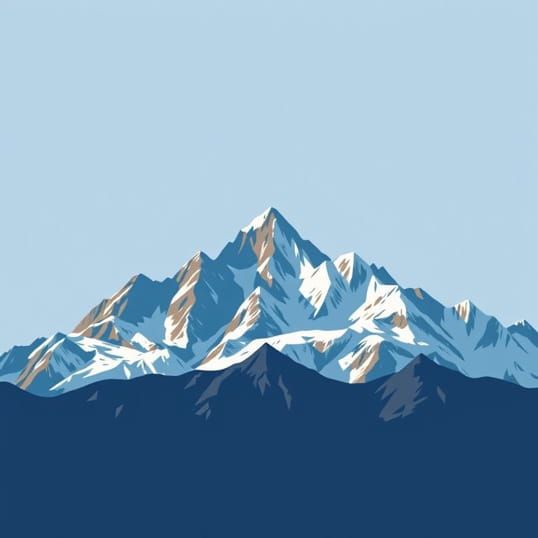
Definition Of Ural Mountains
The Ural Mountains are one of the most important mountain ranges in the world, not only because of their geography but also due to their cultural and historical significance. Stretching across Russia from north to south, they form a natural boundary between Europe and Asia. When people speak about the definition of Ural Mountains, they often refer to their role as a dividing line between continents, their unique landscape, and their immense mineral wealth. Understanding these mountains involves exploring their physical features, geological history, and the way they influence both human activity and the natural environment.
Geographical Definition of the Ural Mountains
The Ural Mountains are a mountain range that extends for more than 2,500 kilometers, running roughly from the Arctic Ocean in the north down to the Ural River and northwestern Kazakhstan in the south. They are traditionally recognized as the natural border that separates European Russia from Asian Russia. This role makes them highly significant in terms of geography and world mapping.
Boundaries and Location
The western side of the Urals merges with the East European Plain, while the eastern side meets the West Siberian Plain. Their location gives them a unique status as a transitional zone between two continents. Because of this, the definition of Ural Mountains is not just about being a range of peaks, but also about being a continental landmark.
Size and Dimensions
The mountain chain is long but relatively narrow. The width varies from 40 to 150 kilometers, depending on the section. Although not the tallest mountains in the world, they have a strong presence across Russia’s landscape. The highest peak is Mount Narodnaya, which rises to about 1,895 meters above sea level.
Geological Definition and Formation
The Ural Mountains are among the oldest mountain ranges on Earth, with their formation dating back more than 250 million years. Unlike younger ranges such as the Himalayas, the Urals are heavily eroded and feature rounded peaks rather than sharp ones. Their geological history helps explain the diversity of rocks and minerals found in the region.
Tectonic Origins
The range was formed during the Uralian orogeny, a process that occurred when the eastern edge of the ancient supercontinent Laurussia collided with the western edge of the Siberian continent. This collision closed the Ural Ocean and pushed up the land to form mountains. As a result, the Urals became a complex mix of geological layers and structures.
Mineral Wealth
One of the most defining features of the Ural Mountains is their mineral richness. The region is known for deposits of iron ore, copper, coal, gold, and precious stones. This mineral diversity is the result of the mountains’ complex geological processes, and it has made the Urals a major center of mining for centuries.
Physical Characteristics
When defining the Ural Mountains, it is important to look at their physical features. They can be divided into several regions, each with distinct landscapes.
-
Polar Urals– Located in the far north, characterized by harsh climates, tundra vegetation, and rugged peaks.
-
Nether-Polar Urals– Slightly south of the Polar region, with some of the highest peaks, including Mount Narodnaya.
-
Northern Urals– Known for dense forests and broad river valleys, less rugged than the northernmost sections.
-
Central Urals– Lower in elevation, with rolling hills and a mix of forests and agricultural land.
-
Southern Urals– Wider and more varied, with steppe regions, forests, and several mineral-rich areas.
Climate and Environment
The Ural Mountains have a diverse climate due to their great length. In the north, the climate is subarctic, with long, cold winters and short, cool summers. In the south, the climate is milder, with warmer summers and more moderate winters. The mountains also act as a natural barrier that influences weather patterns, separating European and Siberian climates.
Flora and Fauna
The Urals are home to a wide variety of plant and animal life. Northern sections have tundra vegetation, while the central and southern parts support forests of birch, pine, and spruce. Wildlife includes bears, wolves, lynxes, and many bird species. This biodiversity makes the region ecologically significant.
Historical and Cultural Importance
The definition of Ural Mountains is not only geographical or geological; it also involves their cultural and historical roles. Throughout history, the mountains have served as both a barrier and a bridge between Europe and Asia.
Human Settlement
Indigenous peoples have lived in the Urals for thousands of years, relying on hunting, fishing, and later mining. During the Russian Empire and the Soviet Union, the region became a center for industry due to its mineral wealth. Many towns and cities in the area grew around mining and metallurgy.
Strategic Role
During World War II, the Urals became a crucial industrial hub for the Soviet Union. Factories were relocated there from western regions to keep them safe from German invasion. The range’s mineral and industrial capacity contributed greatly to the war effort.
Modern Definition and Role
Today, the Ural Mountains are defined not just by their geography but also by their economic and ecological importance. They remain a major source of raw materials, including metals and fuels. At the same time, efforts are being made to protect their natural environment from overexploitation.
Tourism and Natural Parks
The Urals attract tourists interested in hiking, skiing, and exploring unique landscapes. National parks and protected areas showcase the region’s beauty and biodiversity, helping balance industrial use with conservation.
Scientific Significance
Geologists and environmental scientists continue to study the Ural Mountains to learn more about ancient Earth processes, climate changes, and sustainable resource management. Their long geological history makes them a natural laboratory for research.
Why the Ural Mountains Matter
The Ural Mountains are more than just a line of peaks. They represent a natural border between continents, a treasure chest of minerals, and a home to diverse ecosystems. They have played key roles in shaping human history, industry, and cultural identity in Russia and beyond.
When discussing the definition of Ural Mountains, it becomes clear that this range is defined by more than its geography. It stands as a boundary between Europe and Asia, a record of Earth’s ancient geological past, a source of immense mineral wealth, and a region of cultural and historical significance. From their tundra landscapes in the north to their steppe regions in the south, the Urals symbolize endurance and connection. Their importance continues today, making them one of the most remarkable mountain ranges in the world.